USA
USA Canada
Underfloor Heating for Laminate Flooring: Safe Temps, Best Underlays & Pro Tips
TL;DR (Featured Snippet-style)
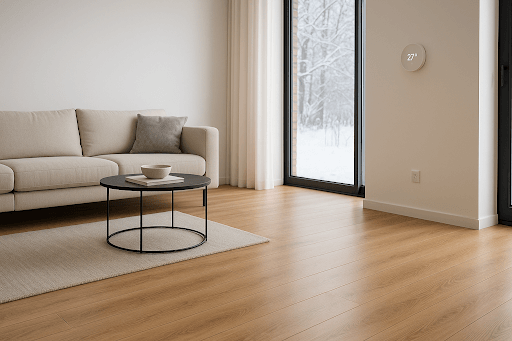
Yes—laminate can work with underfloor heating when the product is explicitly approved by the flooring manufacturer, you follow all of their instructions (some require a separation/decoupling layer between heat and laminate), keep the floor surface at or below ~80–85°F (≈27°C), use a low-R, radiant-rated underlay, and ramp temperatures gradually after install.
Before You Start: Manufacturer Approval Is Non-Negotiable
Always verify—in writing, if possible—that your specific laminate SKU is approved for underfloor heating (UFH). Then follow the brand’s manual to the letter:
- Some manufacturers require a separation from the heat source (e.g., a specific underlay, decoupling membrane, minimum thickness of subfloor/overlayment, or maximum water/electric output).
- Many specify a maximum floor surface temperature (often 27°C/80–81°F) and require a floor sensor.
- Check adhesive/locking system and humidity/moisture requirements, acclimation times, and allowed setback/recovery rates.
If guidance from your system designer and the flooring brand conflicts, defer to the flooring manufacturer to protect your warranty.
Why Laminate + Radiant Works (When Done Right)
- Even comfort and lower perceived setpoint.
- Quiet, clean operation without fan drafts.
- With the right layers, insulation underneath reduces downward heat loss so more heat reaches the room.
Safe Temperature Rules
- Max floor surface: design and control to ≤27°C (≈80–81°F) unless your flooring brand allows otherwise (some permit up to 85°F—follow their cap).
- Warm-up protocol: after installation and acclimation, increase heat gradually over several days; repeat gentle ramps with seasonal changes.
- Floor sensor: required by many brands; use it to enforce the cap.
Underlay & “Separation” Layers
Choose a thin, dense, low-R underlay that is explicitly rated for radiant and, when required by the flooring brand, acts as the separation/decoupling layer. Avoid thick foams or cork that trap heat. If the manufacturer specifies a particular product or minimum R/thickness, use exactly that.
Hydronic vs. Electric
Hydronic (water-based)
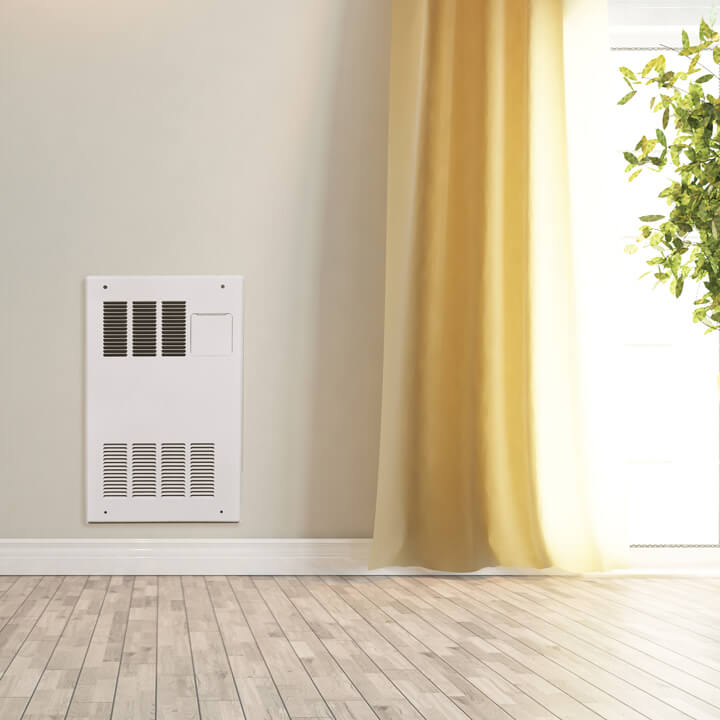
- Best for large areas; pairs with heat pumps at low temps.
- On uninsulated slabs, use EPS-backed over-floor panels to reduce downward loss before floating laminate.
- Use mixing/outdoor reset to maintain gentle, stable temps within the laminate cap.
Electric (cables/mats)
- Good for smaller rooms.
- Only use laminate-approved systems; install the required separation underlay and cap temp with a floor sensor per the brand’s instructions.
Installation Playbook (Laminate over UFH)
- Confirm manufacturer approval & requirements
- Verify the laminate is UFH-compatible and note all required separation layers, max floor temp, allowed heat source types, and ramp rates.
- Prep the subfloor
- Flat, clean, dry; meet moisture specs.
- Select radiant system & insulation
- Size output to stay under the surface-temp cap at design conditions. On cold slabs, add EPS-backed panels to reduce downward loss.
- Install the required underlay/separation layer
- Use the exact product/type the flooring manufacturer specifies (or a radiant-rated low-R equivalent they approve).
- Float the laminate
- Respect expansion gaps, pattern, and locking/adhesive rules.
- Controls & sensors
- Thermostat with floor probe; set hard cap at the manufacturer’s max (often 27°C).
- Commission gently
- After install/acclimation, ramp up slowly over several days; avoid big setbacks.
Design
Notes (For Pros)
- Laminate creates an output ceiling via its temp limit; pick tube spacing, water temps, and panel approach so the room meets load without exceeding the cap.
- Underlay choice dramatically affects output/responsiveness—use low-R options that meet the brand’s separation requirement when specified.
- Avoid aggressive night setbacks; use steady or small setbacks.
Common Mistakes
- Skipping the manufacturer check or ignoring a required separation layer.
- Exceeding surface-temp limits (no floor sensor).
- Using thick/high-R pads.
- Installing over uninsulated slabs without EPS-backed panels to reduce downward loss.
FAQs
Q1: How do I know my laminate is UFH-compatible?
Check the product’s technical data sheet or installation guide. If uncertain, contact the brand. Follow any required separation/underlay and max temperature rules to keep the warranty valid.
Q2: What’s the max safe temperature?
Most laminate brands specify ≤27°C (≈80–81°F); some allow up to 85°F. Enforce the brand’s limit with a floor sensor.
Q3: Can I use electric heat under laminate?
Yes—but only with laminate-approved systems and required separation layers. Set a hard temp cap using the thermostat’s floor probe.
Q4: Do I still need insulation on a slab?
Yes—adding insulation or using EPS-backed radiant panels reduces downward heat loss so more heat reaches the room.
About The Author

![Optional-PEX-Tubing[1]](https://wbiwarm.com/wp-content/uploads/2024/12/Optional-PEX-Tubing1-768x512.png)