USA
USA Canada
Radiant heat and forced air are the two dominant residential heating approaches in North America. Forced air arrived first and became the default because it was inexpensive to install and could share ductwork with cooling systems. Radiant heating, particularly hydronic radiant, has existed alongside it for decades but has never matched it in market share.
That gap exists despite radiant heat being the superior system by almost every measure of comfort, air quality, and long-term operating efficiency. Understanding why requires looking at both systems honestly, from how they deliver heat to how they feel on a cold morning to what they cost to run over a decade. This comparison is written from WBI’s perspective: we supply hydronic radiant systems, and we believe the case for radiant over forced air is strong enough to state directly.
How Each System Delivers Heat
Forced air heating burns fuel in a furnace or extracts heat with a heat pump, then moves that heat through a distribution system made of ducts and registers. The heated air enters the room at a register, typically near the ceiling or floor, rises or falls as convection dictates, and gradually warms the room’s air mass. The thermostat measures air temperature and cycles the system on and off to maintain the setpoint.
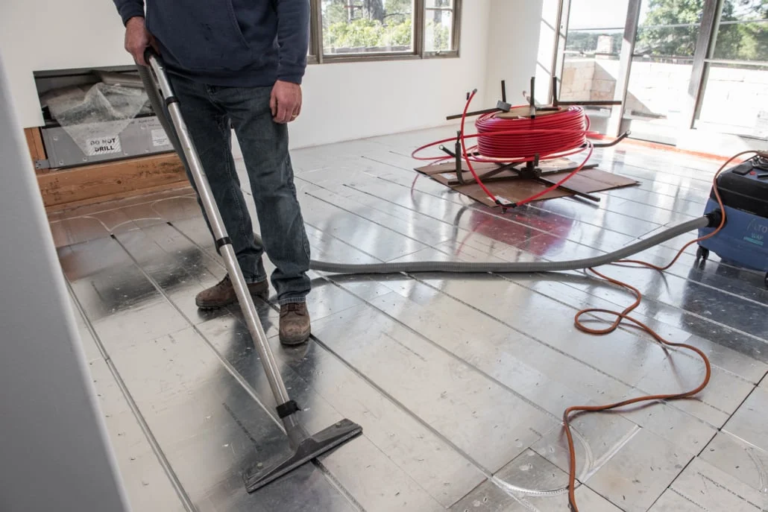
Hydronic radiant heating circulates hot water through tubing embedded in floors, walls, or ceiling panels. Those surfaces warm up and emit infrared radiation into the room. People and objects in the room absorb that infrared energy as warmth, directly and independently of the air temperature. The room’s air also warms up because the warm surfaces heat it by convection, but the primary heat transfer mechanism is radiation, not air movement.
This difference in heat transfer mechanism explains most of what distinguishes the two systems in practice.
Comfort: The Case That Wins Every Argument
Forced air heating has a fundamental comfort problem that no amount of engineering fully solves: it heats the air, but it does not heat the room’s surfaces. Walk across a room heated by forced air in January and the floor is cold. Sit near an exterior wall and you feel a chill from the cold surface behind you even though the thermostat reads 70 degrees. The system is cycling, which means the temperature swings between slightly too warm when the furnace runs and slightly too cool when it does not.
Radiant heating does not have these problems. The floor is warm. The walls are at room temperature rather than conducting cold inward. The room maintains a steady temperature because the thermal mass of the heated surfaces buffers against swings. And because radiant warms people directly rather than heating air first, occupants feel comfortable at lower thermostat setpoints. ASHRAE research shows that a radiant room at 68 degrees Fahrenheit feels as comfortable as a forced air room at 72 degrees, a difference that directly reduces heating energy consumption.
The absence of air movement also matters. Forced air systems create drafts. Every time a register opens, there is a wave of warm air moving through the space. Radiant rooms are still. There is no perceptible air movement, no noise from a blower or ductwork, and no sensation of being in an air stream.
Air Quality: A Clear Win for Radiant
Every forced air system circulates dust, allergens, pet dander, and mold spores through its ducts and back into the living space. This happens every time the blower runs, which in a cold climate can be thousands of times per heating season. Filters help but do not eliminate the problem, and many homeowners do not replace filters on schedule, which makes the problem worse over time.
Hydronic radiant systems have no air distribution component. There are no ducts, no blowers, and no registers. The air in a radiant-heated home moves only by the slow convective currents that any warm surface generates, which are insufficient to keep particles airborne. People with allergies, asthma, or dust sensitivity consistently report a meaningful improvement when they move from forced air to radiant.
Radiant-heated rooms also maintain more stable humidity. Forced air systems repeatedly pass the home’s air over a high-temperature heat exchanger, which dries it. Radiant systems do not, so relative humidity stays higher with no additional humidification equipment required in most climates.
Efficiency: Where Radiant Wins on Numbers
Forced air systems lose heat in several ways that radiant systems do not. Duct leakage is the largest: the US Department of Energy estimates that 20 to 30 percent of heated air escapes from typical duct systems before reaching the living space. Ducts routed through unconditioned attics or crawl spaces lose additional heat by conduction through their walls. And the blower motor itself consumes electricity on every cycle.
Hydronic radiant systems lose heat only from the tubing and manifold, which are insulated. There is no distribution loss equivalent to duct leakage. The system delivers virtually all of its output to the intended space.
The second efficiency advantage is heat source compatibility. Hydronic radiant floor systems operate at supply water temperatures of 85 to 110 degrees Fahrenheit, which is within the optimal range for both condensing gas boilers and heat pumps. A condensing boiler running at return water temperatures below 130 degrees operates in condensing mode reliably, pushing seasonal efficiency above 90 percent. A heat pump delivering 100-degree water achieves a coefficient of performance of 3 to 4 in most climates, meaning 3 to 4 units of heat for every unit of electricity consumed.
Installation Cost and Retrofit Considerations
Forced air has one genuine advantage: in a home already built with ductwork, it is inexpensive to install or replace. Swapping a furnace takes a day and a modest budget. That existing infrastructure is the main reason forced air remains dominant in North America.
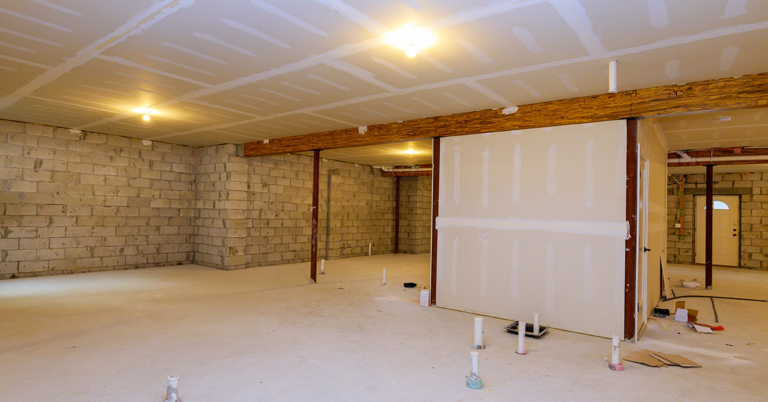
Hydronic radiant has higher upfront installation cost, particularly in an existing home where floors or walls need to be opened for the tubing. In new construction, the cost premium over forced air is more modest and is often offset by the elimination of ductwork from the building envelope. For homes being renovated, the disruption of installing radiant distribution must be weighed against the decades of superior comfort and lower operating cost that follow.
WBI provides system designs and material packages for both new construction and retrofit projects. The design process starts with the home’s heat loss calculation and works backward to the distribution system, heat source, and controls that serve the project best within the budget available.
Frequently Asked Questions: Radiant Heat vs Forced Air
Ready to Switch from Forced Air to Radiant?
WBI has helped homeowners and contractors across North America design and install hydronic radiant systems that outperform forced air on every front. Tell us about your project and we will show you what is possible.
About The Author