USA
USA Canada
Radiant heating is one of the oldest and most effective ways to heat a home. Unlike forced-air systems that push warm air through ducts, radiant heat works by warming surfaces and objects directly. Those surfaces then radiate warmth outward into the room, producing a form of comfort that is quieter, more consistent, and more efficient than conventional heating alternatives.
If you have ever stood near a wood-burning stove or felt the warmth of sunlight through a window on a cold day, you have experienced the same principle. In a house with radiant heating, the floor, wall, or ceiling panel becomes the heat source, and the warmth spreads outward from there.
How Radiant Heat Works in a House
Heat travels in three ways: conduction, convection, and radiation. Radiant heating relies primarily on infrared radiation, the same mechanism the sun uses to warm the earth. A warm surface emits infrared energy, and any person or object in its path absorbs that energy directly as heat.
In a home with radiant floor heating, the floor surface is kept at a temperature between 75 and 85 degrees Fahrenheit. That modest surface temperature warms every person and object in the room without overheating the air. Research consistently shows that radiant homes achieve equivalent perceived comfort at air temperatures 2 to 4 degrees lower than forced-air homes, which translates to lower thermostat settings and lower energy bills.
Types of Radiant Heating Systems in a House
There are two main types of radiant heating used in residential applications: hydronic and electric. Each works differently and suits different situations.
Hydronic radiant systems circulate heated water through tubing installed beneath the floor, inside wall panels, or within ceiling assemblies. The water is heated by a boiler, water heater, or heat pump and distributed through independently controlled zones. Hydronic systems are the most cost-effective choice for whole-house heating and the most common in new residential construction.
Electric radiant systems use heating cables or mats embedded beneath the floor surface. They require no boiler or plumbing, which makes installation simpler in a single room or addition. The trade-off is higher operating cost, since electricity is more expensive per BTU than gas or a heat pump in most regions.
Where Radiant Heat Can Be Installed
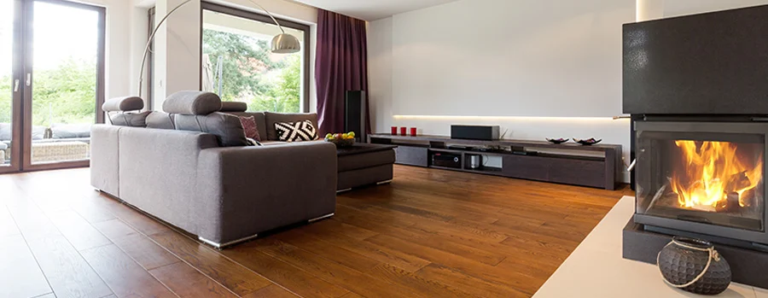
Radiant panels work under almost any floor covering. Tile and stone conduct heat efficiently and perform best. Engineered hardwood, luxury vinyl plank, and laminate all work well over properly designed radiant systems. Solid hardwood is compatible with low-temperature hydronic systems but requires careful temperature and humidity management.
Wall and ceiling panels are a good option in retrofit situations where the floor is not accessible, or in rooms with large windows where ceiling-level heat distribution provides better coverage. WBI’s above-floor panel systems are engineered for retrofit installations, adding minimal height to the existing floor assembly.
Radiant Heat vs Forced Air: The Key Differences
A forced-air furnace heats air, pushes it through ducts, and releases it from registers near the floor or ceiling. The hot air rises and pools near the ceiling while the lower portions of the room stay cooler. The system cycles on and off throughout the day, creating temperature swings that most occupants notice as drafts and uneven warmth.
Radiant heat delivers warmth continuously from a floor or panel surface. The temperature in the room stays consistent from floor to ceiling, and there are no drafts because the air is not being moved by a blower. Homeowners who switch from forced air to radiant consistently describe the new system as feeling warmer at the same thermostat setting, because the mean radiant temperature of the room has increased even when the air temperature has not changed.
Radiant Heat and Indoor Air Quality
One of the less-discussed advantages of radiant heating is what it does not do: it does not move air. Forced-air systems continuously circulate air through ductwork, distributing dust, pet dander, mold spores, and other particles throughout every room. Regular filter changes help but do not eliminate this distribution of particles.
Radiant heating does not circulate air at all. Ventilation in a radiant-heated home is handled separately through a dedicated system, which allows homeowners to control air quality independently from heating. For households with allergies, asthma, or other respiratory sensitivities, this separation is often the most compelling reason to choose radiant heating.
Is Radiant Heat Right for Your House?
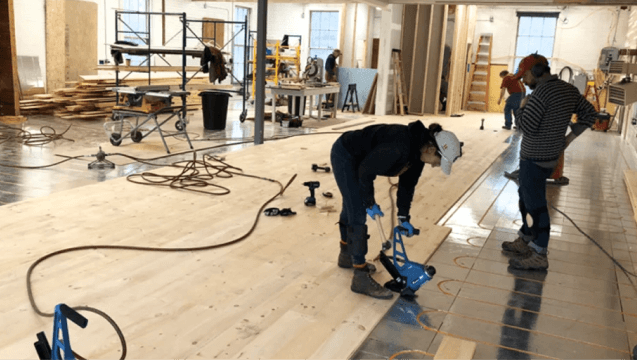
Radiant heating works in new construction and retrofit projects alike. New construction offers the easiest path, because tubing or panels can be integrated into the floor assembly before the finished surface goes down. Retrofit projects require more planning but are entirely achievable with above-floor panel systems that add minimal height to the existing floor.
The system requires a heat source: a boiler, heat pump, or water heater for hydronic systems, or a dedicated electrical circuit for electric systems. A thermostat controls output in each zone, and independent zones allow different rooms to maintain different temperatures. A qualified contractor can calculate the right system size based on the building’s heat loss and the floor coverings in each room.
Frequently Asked Questions About Radiant Heat in a House
Find the Right Radiant Panel for Your Home
WBI designs hydronic radiant panel systems for new construction and retrofit projects. Tell us about your space and we will recommend the right solution.
About The Author