USA
 Canada

Homes with hot water baseboard heat already have most of what a hydronic radiant floor system needs: a boiler, supply and return piping, and zone controls. The one thing missing is a distribution method that delivers comfort at the level where people live. Baseboard heaters do their job at the perimeter of the room. Radiant floors do their job across every square foot of it.
This comparison covers what homeowners and contractors ask most often when weighing the two systems, from how each delivers heat to what an upgrade involves.
How Each System Delivers Heat
Hydronic baseboard heaters are finned-tube convectors. Hot water flows through a copper tube surrounded by aluminum fins. The fins heat adjacent air, which rises by convection. The result is a room warmer at ceiling level than floor level, and warmest near the perimeter walls.
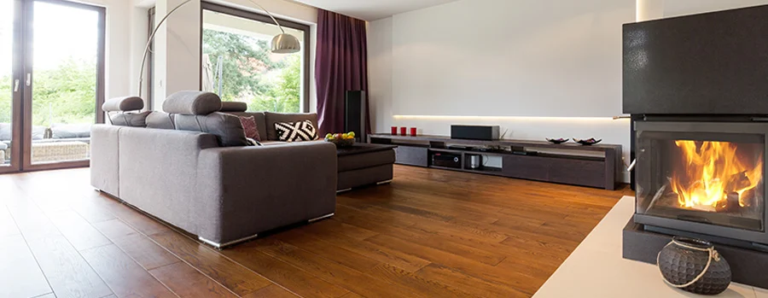
Hydronic radiant floor heating embeds PEX tubing in or below the floor assembly. The floor surface warms and emits infrared radiation upward. People absorb that energy directly as warmth at the level where they sit and stand. The temperature gradient from floor to ceiling is nearly flat, typically 2 to 4 degrees Fahrenheit versus the 8 to 12 degrees common in baseboard-heated rooms.
Efficiency: Where the Operating Cost Difference Comes From
Both systems draw hot water from the same boiler. The efficiency gap comes from the temperatures each requires. Baseboard needs 140 to 180 degrees Fahrenheit to deliver adequate output through its finned surfaces. At these temperatures a condensing boiler cannot condense and operates at conventional efficiency, typically 80 to 84 percent AFUE.
Radiant floor systems operate at 85 to 110 degrees Fahrenheit. At these temperatures a condensing boiler runs in condensing mode reliably, recovering latent heat from flue gases and reaching seasonal efficiency above 90 percent. The same boiler, the same fuel, and the same home produces meaningfully less fuel consumption when distribution is radiant floor rather than baseboard.
For homes with electric baseboard, the advantage of switching to hydronic radiant is even larger. Electric resistance heat is the least efficient space heating option available, and replacing it with a hydronic system connected to a gas boiler or heat pump cuts annual heating bills substantially.
The Retrofit: What It Actually Takes
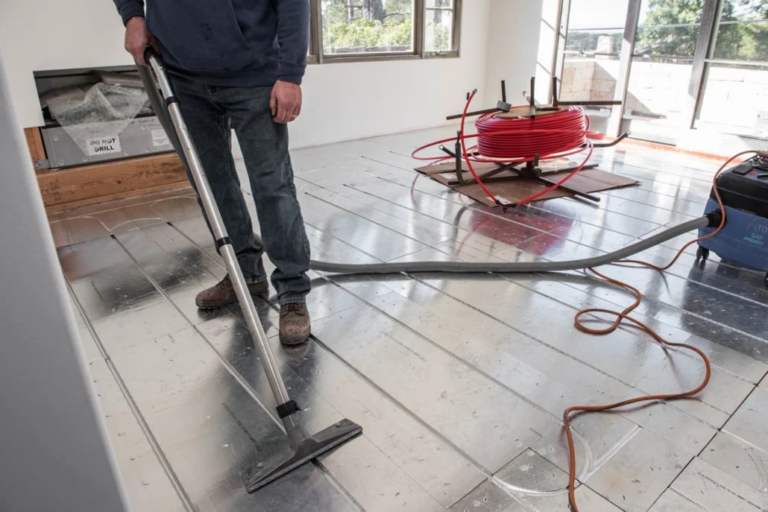
The most common scenario is a home with a hydronic boiler and baseboard heaters throughout. The boiler typically has spare capacity because baseboard systems are oversized relative to actual heat loss. WBI designs the upgrade room by room: supply and return lines from a new manifold feed PEX circuits in each floor zone, the baseboard units come out, the floor is opened for tubing, and the finish floor returns. Each room becomes a zone with its own thermostat.
In wood-framed floors with an accessible crawl space, staple-up installation attaches tubing to the underside of the subfloor from below, avoiding floor replacement entirely. This is slower to respond than an embedded slab but avoids disruption when the finish flooring is staying.
When Baseboard Still Makes Sense
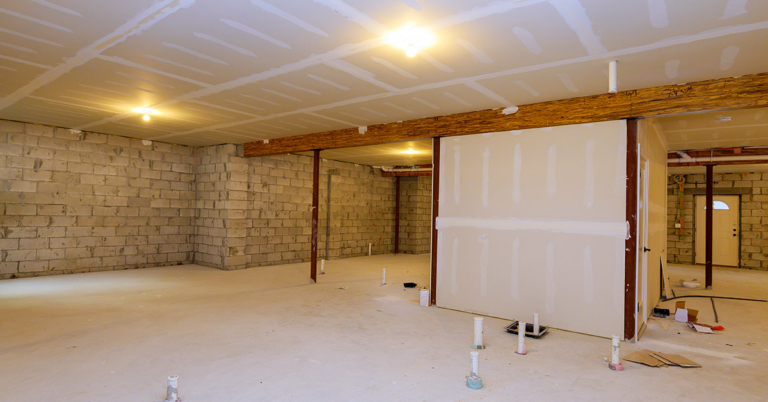
Baseboard has one genuine advantage: installation simplicity. A baseboard unit can be replaced in an afternoon. For a landlord managing a rental, or a homeowner expecting to move in a few years, that simplicity may outweigh radiant’s benefits. For a single supplemental zone such as an occasionally used basement, a baseboard unit on the existing system is often the practical answer. WBI designs whole-home radiant systems and is straightforward about when a simpler approach fits better.
Frequently Asked Questions: Radiant Heat vs Baseboard Heat
Upgrade from Baseboard to Radiant with WBI
WBI designs hydronic radiant floor systems that replace baseboard heating using your existing boiler wherever possible. Tell us about your current system and we will put together a design.
About The Author