USA
USA Canada
What Installation, Running, and Lifetime Costs Actually Look Like Before You Decide
Radiant heat has a reputation for being expensive. That reputation is not entirely wrong, but it is not the full picture. The real answer depends on which type of system you are comparing, whether you are measuring the cost to install or the cost to operate, and what you are comparing it against.
This guide breaks down each of those variables so you can make a clear decision rather than ruling out a system that might fit your budget better than you expect.
“Radiant Heat” Is Not One System
The most important thing to understand before comparing prices is that radiant heating covers several distinct technologies with very different cost profiles. Lumping them together leads to estimates that are either inflated or misleading depending on which system the source is actually describing.
Electric radiant systems use resistance heating cables or mats installed beneath the floor surface. They are inexpensive to purchase and straightforward to install in small spaces, but electricity is the most expensive fuel source for space heating, which makes them costly to run across larger areas.
Wet hydronic systems circulate hot water through PEX tubing embedded in a concrete slab or gypcrete pour. These deliver consistent whole-home performance but also involve the highest installation complexity and labor cost. Concrete work, curing time, multiple trades, and boiler installation all contribute to the final price.
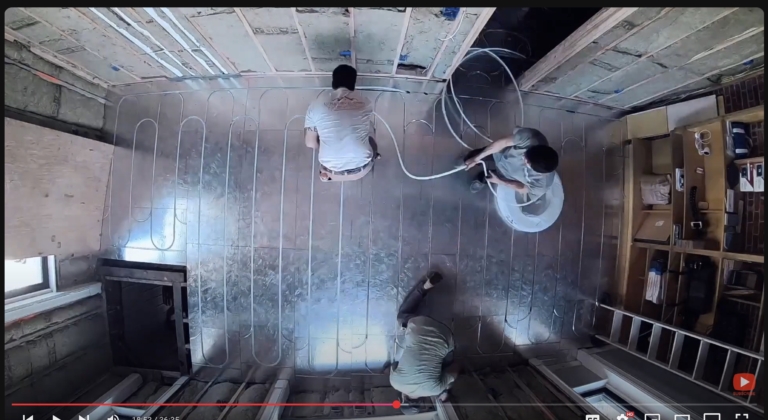
Dry hydronic panel systems, like WBI RadiantBoard and ThermalBoard, use the same hot water principle without the concrete pour. Panels arrive pre-routed with aluminum-lined grooves, install directly over the subfloor, and are ready for finished flooring the same day. This approach removes the most expensive parts of a wet hydronic installation while preserving the efficiency advantages of low-temperature hot water heat.
Key Point: Panel systems like WBI RadiantBoard eliminate the concrete pour and subcontractor coordination that push wet hydronic costs up. Installation is faster, cleaner, and accessible to a wider range of project budgets.
Is Radiant Floor Heat Expensive to Install?
Yes, hydronic radiant heating costs more upfront than a standard forced-air furnace. But the gap is narrower than most estimates suggest, particularly when you separate labor-intensive wet systems from panel-based alternatives.
Electric systems typically cost $8 to $15 per square foot installed, including the heating mat and thermostat. A 150 square foot bathroom usually runs $1,200 to $2,250. For targeted supplemental heating in one or two rooms, this is a manageable investment with a predictable payback period.
Wet hydronic systems range from $15 to $25 per square foot for the full installation, which includes tubing, concrete work, boiler, manifold, and labor. A 2,000 square foot home can reach $30,000 to $50,000. That range reflects real costs: concrete pours need days to cure, multiple trades need to coordinate, and the system cannot be tested until everything is assembled and filled.
WBI panel systems fall below wet hydronic numbers because they eliminate the slab work and curing time entirely. Panels also add only 5/8 inch (ThermalBoard retrofit) to 7/8 inch (RadiantBoard on wood subfloor) of floor height, avoiding the door-trimming and threshold issues common in full-depth slab installations.
Is Radiant Heat Expensive to Run?
This is where hydronic radiant separates from its reputation. Hot water radiant systems operate at supply temperatures between 90 and 120 degrees F, far below the 140 to 160 degree air temperatures that forced-air systems push through ductwork. That lower operating temperature means the heat source works less hard for the same comfort output.
The other factor is duct loss. A standard forced-air system loses 20 to 30 percent of its heat through duct leakage and conduction before it ever reaches the living space. Radiant systems have no ductwork, so the energy that leaves the boiler arrives at the floor.
Most homeowners with hydronic radiant report 15 to 30 percent lower heating bills compared to forced-air systems serving the same area. A second factor compounds those savings: because radiant heat warms bodies and surfaces directly, most people feel comfortable at a thermostat setting 2 to 3 degrees lower than with forced air. That adjustment alone cuts heating costs by an additional 10 to 15 percent without any change in comfort.
A whole-home hydronic system for a 2,000 square foot house typically costs $600 to $1,200 per year to operate, depending on local gas rates and climate. That puts the average monthly cost at roughly $50 to $100 during the heating season, which is competitive with or below a well-maintained forced-air system of equivalent size.
Is Electric Radiant Heat Expensive?
For whole-home use, yes. Electric resistance heating converts power to heat at a rate of roughly $0.10 to $0.30 per kilowatt-hour depending on local utility rates. Running a large electric radiant system across an entire home is rarely economical outside of climates with very short heating seasons or unusually low electricity costs.
Where electric radiant makes clear financial sense is in targeted applications: a single bathroom, a kitchen tile zone, or a small addition where running hydronic tubing would require significant extra piping. In those situations, the lower installation cost and simple single-zone thermostat control usually outweigh the higher per-hour energy cost. A 150 square foot bathroom running 8 hours daily typically costs $15 to $60 per month, which is manageable for most budgets.
If you are evaluating radiant heat for whole-home primary heating, hydronic is almost always the better long-term financial choice. The higher installation cost is recovered through lower operating costs over the 30 to 50 year lifespan of the system.
The Lifetime Cost Picture
Heating systems are a long-term investment, and the upfront installation cost tells only part of the story. A forced-air gas furnace typically lasts 15 to 20 years and costs $3,000 to $7,000 to replace, not counting the ductwork maintenance and energy losses that accumulate over that period.
A hydronic radiant system, by contrast, lasts 30 to 50 years. The boiler requires an annual service visit costing $150 to $300, but the tubing or panels themselves rarely need attention once installed. That durability changes the per-year cost calculation significantly when spread over the full system lifespan.
A $30,000 hydronic installation spread over 40 years of service amounts to $750 per year in capital cost. A $5,000 furnace replaced every 18 years is $278 per year, but with operating costs that are typically 15 to 30 percent higher annually. In climates with heating seasons of five months or more, the 20-year total cost of hydronic radiant frequently comes out ahead once operating savings are factored in.
When Radiant Heat Is Worth the Cost
Radiant heat is the strongest fit for new construction or major renovation where the subfloor is already open. Adding a WBI panel system during a kitchen remodel or bathroom gut adds relatively little cost when subfloor access is already part of the project scope.
Whole-home hydronic radiant makes the most financial sense for homeowners planning a long stay in a cold climate. The combination of lower operating costs, longer system lifespan, and superior comfort creates compounding value that outpaces the upfront premium over a 10 to 20 year horizon.
Electric radiant is a practical upgrade for any bathroom or tile zone where floor warmth is the goal rather than whole-home heating. The installation is simple, the thermostat control is precise, and the monthly cost in a single-room context is manageable for most homeowners.
Frequently Asked Questions About Radiant Heat Costs
About The Author