USA
USA Canada
What Is Radiant Floor Heating?
Radiant floor heating is one of the most comfortable heating systems you can install in a home. No noisy vents. No cold spots. Just even, quiet warmth from the floor up.
But the biggest question homeowners ask is simple:
“How much does radiant floor heating actually cost?”
The answer depends on: electric vs hydronic, room size, new construction vs remodel, flooring type, and whether the system is designed correctly from the start.
The good news? Radiant heat is far more flexible than most people think.
Average Radiant Floor Heating Costs
Here’s a realistic national overview based on current 2025–2026 industry pricing data:
| System Type | Installed Cost Per Sq Ft | Best Application |
|---|---|---|
| Electric Radiant | $8–$15+ | Bathrooms, small rooms |
| Hydronic Radiant | $7–$20+ | Whole homes, large areas |
| Whole-Home Hydronic System | $12,000–$43,000+ | New construction or major remodels |
Industry estimates from multiple sources place most radiant floor systems in the $7–$20 per square foot installed range, depending on the system and project complexity.
Electric vs Hydronic Cost Breakdown
Electric Radiant Heating
Electric systems use cables or mats under the flooring surface.
Typical installed cost: $8–$15 per sq ft. Small bathroom projects often range from $500–$1,700 total.
Best for: bathrooms, kitchens, small retrofit areas, and homes without existing hydronic infrastructure.
Electric radiant usually has the lowest upfront cost for small spaces. But operating costs rise quickly in larger applications.
Hydronic Radiant Heating
Hydronic systems circulate warm water through PEX tubing beneath the floor.
Typical installed cost: $7–$20+ per sq ft. Whole-home systems commonly range from $12,000–$43,000+ depending on size and heat source.
Best for: entire homes, large rooms, multi-zone systems, and long-term efficiency.
Hydronic systems cost more upfront because they involve PEX tubing, manifolds, pumps, controls, and a boiler or heat source. But for larger areas, they are usually much cheaper to operate long term.
What About Panel Systems Like WBI?
Traditional radiant systems often get associated with thick concrete pours, slow response times, and complicated installations. Modern panel systems change that.
WBI panel systems including RadiantBoard, ThermalBoard, RadiantBoard EPS, and ThermalBoard EPS are designed to simplify installation while improving heat transfer and responsiveness.
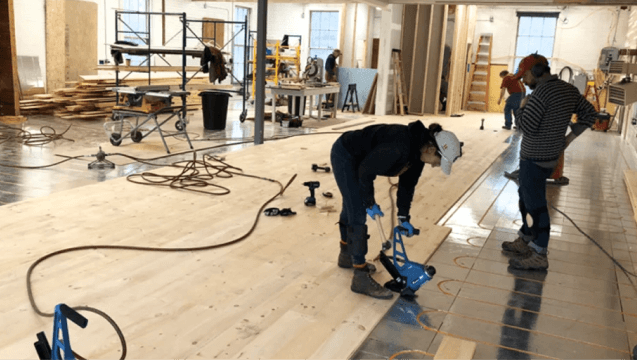
Benefits of modern panel systems: faster installation, dry-install options over wood subfloors, strong heat output with aluminum transfer technology, faster response times than many traditional slab systems, and easier retrofit potential.
This is one reason hydronic radiant has become increasingly practical outside of luxury custom homes. For projects over larger square footage, properly designed hydronic panel systems often deliver a better balance of comfort, efficiency, operating cost, and long-term value.
Cost by Room Size
| Area | Electric System | Hydronic System |
|---|---|---|
| Small Bathroom (50 sq ft) | $500–$1,200 | $700–$1,500 |
| Master Bath (100 sq ft) | $800–$1,700 | $1,200–$2,500 |
| Kitchen (250 sq ft) | $2,000–$4,000 | $3,000–$6,000 |
| Whole Home (2,000 sq ft) | $16,000–$30,000+ | $14,000–$43,000+ |
Compiled from current 2025–2026 industry cost data.
Why Whole-Home Electric Radiant Usually Does NOT Make Sense
This is where many homeowners get surprised. Electric radiant can look cheaper initially because installation is simpler: there is no boiler, no manifolds or pumps needed. But electricity is generally far more expensive per BTU than gas-fired hydronic systems.
That means: electric = lower upfront cost, and hydronic = lower long-term operating cost.
For this reason, electric radiant is typically best used in small spaces, as supplemental comfort heat, or when no hydronic system exists. If a home already has hydronic radiant infrastructure, expanding the hydronic system is usually the smarter move.
Operating Costs: What Should You Expect?
Operating cost depends heavily on insulation quality, climate, energy source, thermostat settings, and floor covering.
But industry data commonly shows electric systems costing more monthly in larger applications, while hydronic systems become more economical as square footage increases. Some homeowners report hydronic systems operating at surprisingly low monthly costs when paired with high-efficiency boilers, proper insulation, low water temperatures, and quality radiant design.
What Increases Radiant Floor Heating Cost?
1. Flooring Material
Tile and concrete perform best because they transfer heat efficiently. Carpet and thick wood can reduce system performance and require higher output to compensate.
2. Retrofit vs New Construction
Retrofits usually cost more due to floor removal, height transitions, and access limitations. New construction is the most cost-effective time to install radiant.
3. Heat Source
Hydronic systems may use gas boilers, propane, heat pumps, geothermal, or solar thermal. The choice of heat source significantly affects both installation and long-term operating costs.
4. System Design
A properly engineered layout matters enormously. Poor tube spacing, undersized systems, or incorrect water temperatures can hurt both comfort and efficiency.
Is Radiant Floor Heating Worth It?
For many homeowners, yes. Radiant heat offers consistent comfort, quiet operation, better temperature uniformity, reduced air movement and dust circulation, and strong long-term durability. And unlike forced air, the heat stays where people actually live, at floor level.
According to several industry sources, radiant systems can also improve perceived comfort enough that homeowners often run lower thermostat settings while feeling equally warm.
Final Verdict
Here’s the simple version:
If you are heating a single bathroom, electric may absolutely make sense. But if you are designing comfort for an entire home, hydronic radiant usually delivers the better long-term investment.
Frequently Asked Questions About Radiant Floor Heating Cost
About The Author