USA
USA Canada
Radiant Heat and How Does It Actually Work?
Radiant heat is thermal energy transferred through electromagnetic radiation rather than through air movement or physical contact. Unlike convection heating, which warms air and relies on that air circulating throughout a space, radiant heat travels directly from a warm surface to cooler objects and people in the room. No air movement is required. No ductwork carries the heat from one place to another.
The term “radiant” refers to the way energy radiates outward from a heat source in all directions. When a surface is warm, it emits infrared radiation. That radiation is absorbed by people, furniture, walls, and floors, raising their surface temperatures. The room feels warm because everything in it is warm, not just the air moving through it.
How Does Radiant Heat Work in a Floor Heating System?
In a hydronic radiant floor heating system, warm water is circulated through tubing embedded in or installed beneath the floor. The floor surface absorbs that heat and radiates it upward into the room. Everything the floor heats through direct radiation, including furniture, walls, and the people in the space, then re-radiates heat back into the room as well.
The result is a room where heat is distributed from the ground up, warming the space evenly from floor to ceiling. Temperatures at floor level are slightly warmer than at head level, which is exactly the opposite of a forced air system and precisely what the human body finds most comfortable.
Hydronic systems use a boiler or heat pump to heat water, which is then pumped through a network of PEX tubing. The tubing runs in loops beneath the floor surface, either embedded in concrete or installed within radiant panel systems like EcoWarm RadiantBoard or ThermalBoard that sit over existing subfloors. The water temperature is typically kept between 80 and 120 degrees Fahrenheit, far lower than a conventional baseboard system, which is a key reason hydronic radiant is so energy efficient.
Radiant Heat vs. Forced Air: A Fundamental Difference
To understand why radiant heat works better, it helps to understand how forced air heating actually delivers warmth. In a forced air system, a furnace heats air and a blower pushes that hot air through ducts and out of registers placed around the home. The air rises to the ceiling because heat rises, stratifying the room so that the warmest air is near the top where no one sits or walks. Meanwhile, the floor stays cold.
To maintain a comfortable temperature at occupant level, a forced air system has to overheat the upper portions of the room. That wastes energy. It also creates constant air movement, which circulates dust, allergens, and airborne particles throughout the home. Forced air systems are loud. The on-and-off cycling of the blower creates noticeable temperature swings as the system fires up, overheats, shuts off, and allows the space to cool before firing again.
Radiant heat eliminates all of those problems. There is no air movement. There is no noise. There is no temperature cycling. The floor radiates heat continuously and evenly, and the room maintains a steady, comfortable temperature at occupant level. Studies have shown that people feel equally comfortable in a radiant-heated room set to 68 degrees Fahrenheit as they do in a forced air room set to 72 or 73 degrees. That difference translates directly into lower energy bills.
Types of Radiant Heat Systems
Hydronic Radiant Floor Heating
Hydronic systems circulate heated water through PEX tubing beneath the floor. They require a heat source, typically a gas boiler, electric boiler, or air-to-water heat pump, along with a manifold system to distribute water to individual zones. Hydronic systems have higher upfront installation costs but much lower operating costs, making them the right choice for whole-home heating in new construction or major renovations.
Because hydronic systems can be connected to a wide range of heat sources, including solar thermal panels and high-efficiency heat pumps, they are also the more sustainable long-term option. The operating temperature of the water can be adjusted based on the heat source and floor covering, giving contractors and homeowners precise control over system performance.
Electric Radiant Floor Heating
Electric systems use resistance heating cables or mats installed beneath the floor. They are simpler to install and work well in small areas like bathrooms or mudrooms, but they are expensive to operate as a primary heating source for a full home. Electric radiant is best suited for supplemental heating in targeted areas rather than whole-home applications.
What Makes Radiant Heat Feel Different
Anyone who has lived with radiant floor heating will tell you that it simply feels different from any other heating system. The warmth feels natural and pervasive rather than directional. There are no drafts. Your feet are warm, your body is warm, and the room temperature is consistent from one corner to another.
This is because radiant heat warms people and objects directly rather than warming the air around them. The thermal comfort model that HVAC engineers use, the one that determines whether people feel comfortable in a given space, accounts for the temperature of surrounding surfaces as much as it accounts for air temperature. In a radiant-heated room, the mean radiant temperature of all surrounding surfaces is elevated, so the body loses heat more slowly. You feel warmer at a lower air temperature.
This is also why radiant heat is often described as feeling similar to sunshine. Sunshine warms you through radiation, not through warm air. A radiant floor does the same thing at a lower intensity, warming every surface in the room so that your body is constantly receiving gentle radiant energy from all directions.
Radiant Heat Applications
Radiant heat works in virtually any type of construction, though the installation method varies depending on the substrate and floor covering.
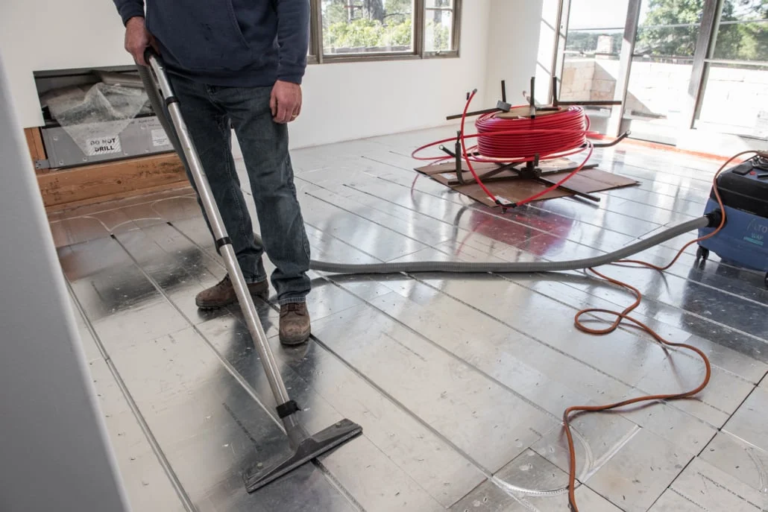
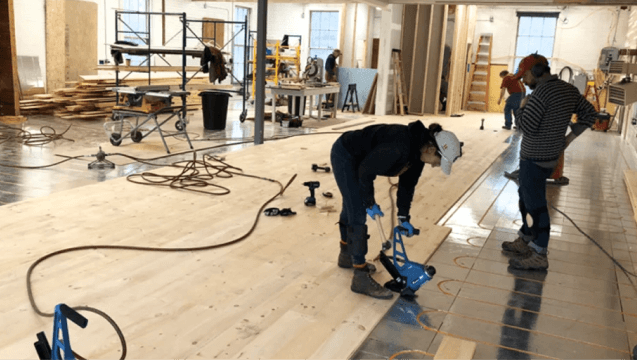
In new construction over a wood subfloor, radiant panels like EcoWarm RadiantBoard are installed directly over the subfloor, with PEX tubing snapped into routed channels. The panels create a thermally efficient layer that transfers heat upward into the finished floor. This approach works under tile, engineered hardwood, luxury vinyl, carpet, and most other floor coverings.
In concrete slab applications, PEX tubing is tied to rebar or a wire mesh system and poured into the slab. The concrete acts as a thermal mass, absorbing heat slowly and releasing it steadily over time. Concrete slab systems are common in commercial buildings, garages, and ground-level residential floors.
In retrofit or remodel situations, low-profile panels like ThermalBoard can be installed with minimal floor height increase, making radiant heat practical even in existing homes without a full gut renovation.
Radiant heat is also used in walls and ceilings, particularly in commercial buildings, garages, and spaces where floor installation is not feasible. Radiant ceiling panels in particular can be highly effective, though they work on a slightly different principle than floor systems.
Is Radiant Heat Right for Your Project?
Radiant heat is the best heating option for most residential and commercial applications where comfort, efficiency, and long-term operating cost matter. It delivers better thermal comfort than forced air at lower operating temperatures, eliminates ductwork losses, produces no noise, and requires minimal maintenance once installed.
The primary consideration is upfront cost. Hydronic radiant systems require more material and labor to install than a forced air furnace and ductwork system. However, the operating cost savings, combined with the comfort advantages and the near-zero maintenance requirements of a well-installed system, typically justify that investment over the life of the building.
For anyone building a new home, undertaking a major renovation, or looking for a heating system that will deliver genuine comfort for decades, radiant heat is worth serious consideration. The technology has been in use for centuries, the modern components are reliable, and the performance speaks for itself.
Frequently Asked Questions About Radiant Heat
WBI ships its radiant heating panels across North America from its Wisconsin distribution center.
About The Author