USA
USA Canada
How to Plan a Radiant Floor Heating Layout
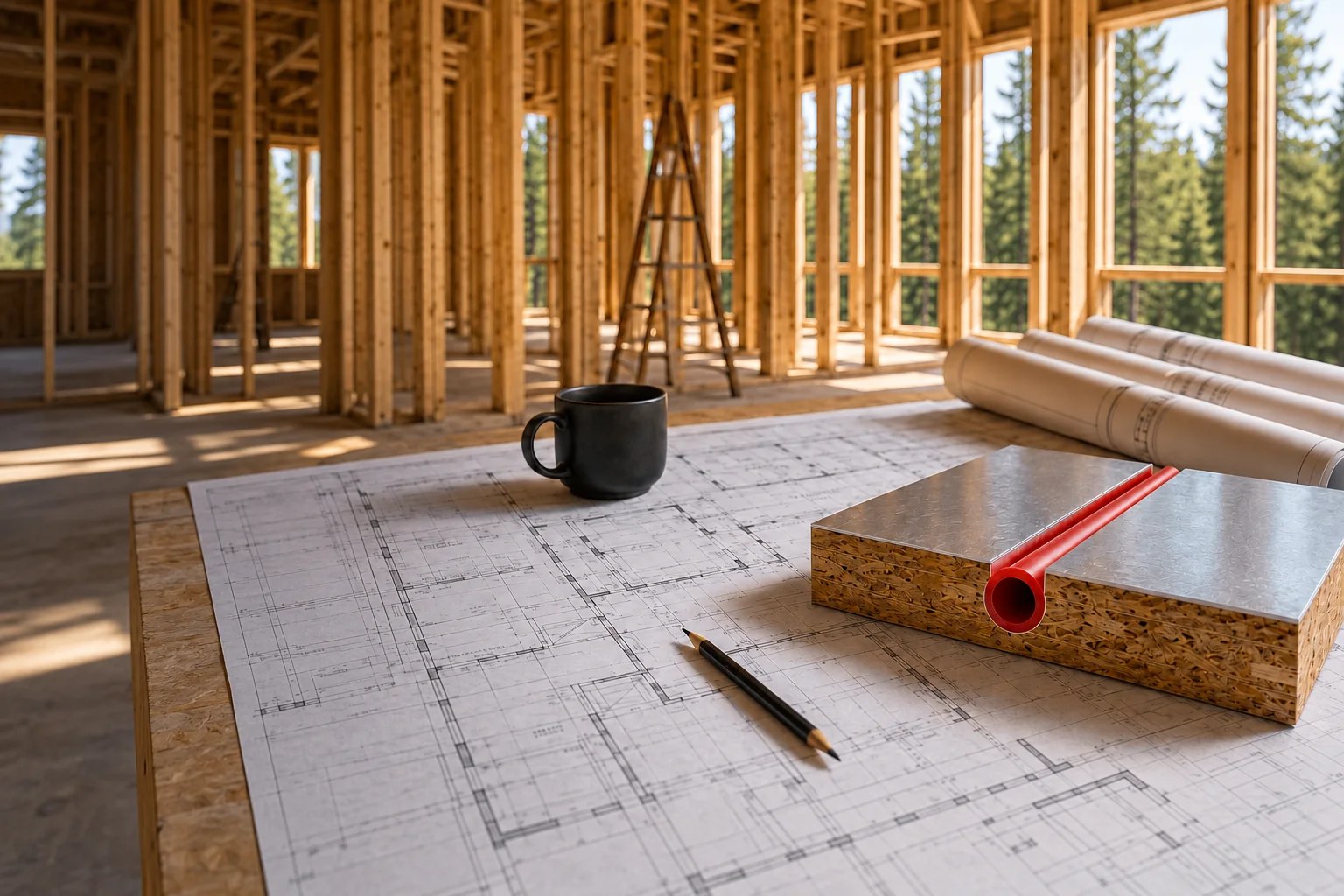
Designing a proper radiant floor layout is one of the most important steps in building an efficient hydronic system.
A well-planned radiant floor heating layout ensures:
- Even floor temperatures
- Proper heat output per room
- Efficient loop lengths
- Long-term system reliability
Whether you’re working on a wood subfloor, basement, or slab, the goal is the same:
Match the layout, loop strategy, and system design to the heat requirements of the space.
Start With Heat Loss Before Layout
Before planning any radiant heat layout, you need to determine the heat load of each room.
Typical ranges:
- 15–25 BTU/sqft → well insulated spaces
- 25–35 BTU/sqft → average construction
- 35+ BTU/sqft → high load areas (glass, exterior walls)
This determines:
- Loop strategy
- Zoning approach
- Overall system design
Without this step, even a well-installed radiant floor heating layout can underperform.
Prioritize Heat Delivery to Exterior Walls Testing

In any radiant floor layout, the coldest areas of the home are typically along exterior walls and high-glass areas.
Because of this, layout should always be planned so that:
The first 50% of each loop is directed toward the coldest part of the space. This ensures:
- Maximum heat output where it’s needed most
- Reduced temperature drop before reaching exterior walls
- More even room comfort
If the loop reaches interior areas first, you risk:
- Underheating perimeter zones
- Overheating interior floor areas
Start at an Outside Corner and Work Inward
A consistent rule in radiant floor heating layout is to begin at an exterior corner of the room and work inward.
Starting at the outside corner allows you to:
- Deliver heat immediately to perimeter zones
- Maintain a logical and repeatable layout pattern
- Keep loop routing organized and predictable
From there, the layout progresses toward the interior of the space, ensuring the highest energy portion of the loop is used where it matters most.
Radiant Loop Length and Layout
![installedtube-1[1]](https://wbiwarm.com/wp-content/uploads/2024/11/installedtube-11.jpg)
A proper radiant floor loop layout must account for loop length.
General rule:
- Keep loops under ~300 ft
Longer loops:
- Increase pressure drop
- Reduce performance
Shorter loops:
- Improve control
- Allow better balancing
A typical radiant manifold layout will include:
- Multiple loops per zone
- Balanced loop lengths
- Organized supply and return connections
How Layout Is Simplified With WBI Systems
With traditional installs, loop routing and layout decisions are often made in the field.
With WBI:
- Layouts are planned in advance
- Panel pathways guide routing
- Loop paths are clearly defined
Each project includes a custom CAD layout, which shows:
- Panel placement
- Loop routing
- Manifold connections
This approach keeps installations consistent and reduces:
- Field layout errors
- Uneven loop lengths
- Guesswork during install
Zoning Strategy in Radiant Floor Design

A good radiant floor design separates areas based on usage and heat load.
Common zoning strategies:
- One zone per major room or area
- Separate zones for high-load spaces
- Group similar load areas together
Proper zoning improves:
- Comfort
- Efficiency
- System control
Application Matters More Than Layout Alone
A radiant heating layout should always match the installation type.
Wood Subfloor
- Faster response time
- Lower thermal mass
- Panel systems are ideal for this application
Over Concrete or Basement
- Requires insulation below
- Slower response without it
- Insulated panel systems improve performance
Slab Systems
- High thermal mass
- Longer response time
- Layout must be correct before the pour
With WBI systems, the application determines the system used, while the layout is executed through a defined plan.
Common Radiant Floor Layout Mistakes
- Skipping heat loss calculations
- Not prioritizing exterior walls
- Designing loops too long
- Poor manifold placement
- Not following a defined layout plan
Many of these issues come from inconsistent field layout decisions.
A More Controlled Approach to Radiant Layout
Traditional radiant design often relies on:
- Field-based layout decisions
- Installer interpretation
- Adjustments during installation
A more controlled approach uses:
- Pre-planned layouts
- Consistent routing strategies
- Project-specific drawings
WBI panel systems follow this approach by combining:
- Defined routing paths
- Consistent layout execution
- Custom CAD planning
The Bottom Line
A successful radiant floor heating layout comes down to:
- Accurate heat loss
- Prioritizing exterior walls
- Keeping loop lengths controlled
- Following a clear layout plan
The fewer decisions left to the field, the more consistent the system will perform.
Final Takeaway
If you’re planning a radiant floor layout, focus on:
- Getting heat to the coldest areas first
- Starting at exterior walls and working inward
- Maintaining controlled loop lengths
- Following a layout plan from the start
This approach leads to:
- Better comfort
- More even floor temperatures
- More predictable system performance
About The Author