In Floor Radiant Heat: Everything You Need to Know Before You Build
In-Floor Radiant Heat: What to Know Before Building
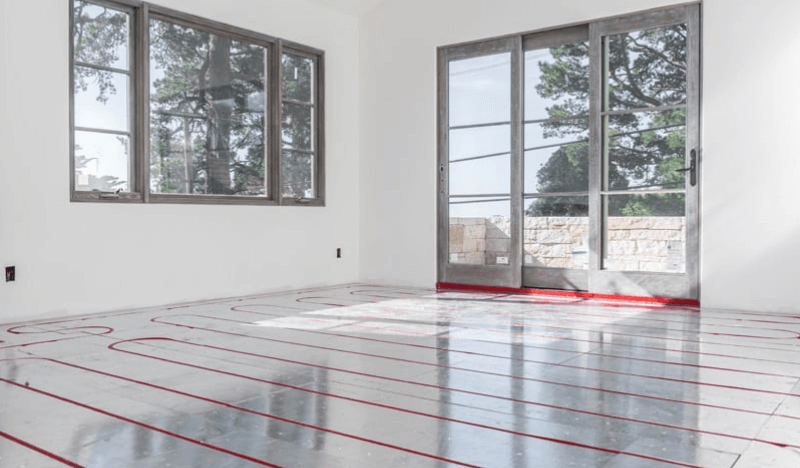
Cold tile underfoot on a January morning. A living room where your feet are cold even though the thermostat reads 70 degrees. A basement that never quite feels livable no matter what you do. If any of these sound familiar, in floor radiant heat is probably worth your serious attention.
This guide covers what in floor radiant heat actually is, how it works, what it costs, and how to choose the right system for your project.
What Is In Floor Radiant Heat?
In floor radiant heat is a heating system built into the floor itself. A heat source, either warm water circulating through flexible PEX tubing or an electric resistance cable, is installed beneath your finished flooring. That heat radiates upward through the floor into the room, warming occupants directly rather than just heating the air.
The result is noticeably different from forced-air heating. Instead of warm air rising to the ceiling while your feet stay cold, heat enters the room at floor level and rises naturally. The temperature is even from wall to wall and from floor to ceiling. There are no drafts, no noise, and no ductwork distributing dust through the air.
The U.S. Department of Energy identifies hydronic radiant systems as the most efficient heating option for heating-dominated climates. Studies from Kansas State University show radiant systems can operate up to 25 percent more efficiently than forced-air alternatives, primarily because duct systems lose 25 to 40 percent of generated heat before it ever reaches the living space. Radiant systems have no ducts and no duct losses.
Hydronic vs Electric: Which Type Is Right for You?
1. Hydronic In Floor Radiant Heat
Hydronic systems circulate warm water through PEX tubing embedded in or beneath the floor. The water is heated by a boiler or, increasingly, an air-to-water heat pump. Hydronic is the right choice for whole-home heating or large multi-room applications. A modern heat pump paired with a hydronic radiant floor can operate at 350 to 450 percent efficiency, making it the most energy-efficient home heating combination available in 2026.
The reason the pairing works so well is water temperature. Air-to-water heat pumps operate most efficiently when delivering low-temperature water, ideally in the 85 to 105 degree Fahrenheit range.
WBI’s radiant panel systems are specifically designed to perform at these low temperatures, which means the heat pump can run at peak efficiency throughout the heating season rather than working harder to reach the 130 to 160 degrees that baseboard radiators require.
2. Electric In Floor Radiant Heat
Electric systems use thin heating cables or mats installed beneath the finished floor. They are simpler, faster to install, and less expensive upfront than hydronic systems. For a single bathroom or kitchen, electric is the practical choice.
A typical bathroom installation runs $800 to $2,000 all-in, with monthly operating costs of roughly $14 to $20 for a few hours of morning use. For whole-home applications, however, the higher cost of electricity makes hydronic the more economical long-term solution.
WBI’s Panel Systems: Built for Low-Temperature Performance
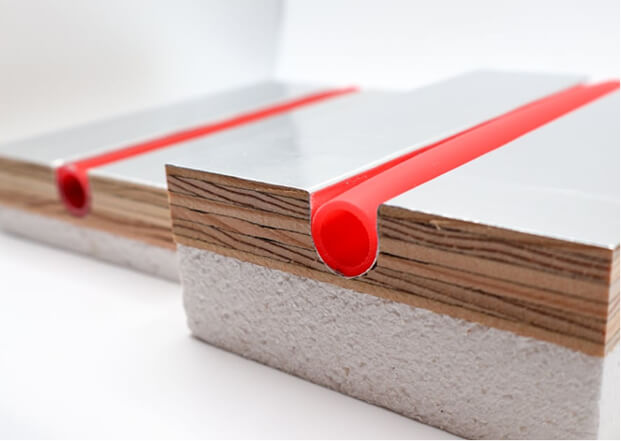
WBI has manufactured above-floor hydronic radiant panel systems since 2000. Their systems install directly on top of the subfloor and beneath finished flooring goods, eliminating the need to pour a concrete slab while still delivering fast, even heat distribution.
The key to their performance is aluminum. Aluminum conducts heat 1,500 times more effectively than wood. Every WBI panel uses an aluminum laminate layer that spreads heat outward from each tubing run in milliseconds, producing a floor surface that feels consistently warm across its entire area rather than warm directly above the tubing and cool in between.
Their product line covers every common application type. Ecowarm RadiantBoard is their flagship above-subfloor panel, featuring a premium plywood substrate and thicker aluminum laminate with tubing routed at 12-inch spacing. It can deliver up to 42 BTU per square foot per hour at modest water temperatures.
ThermalBoard offers 8-inch tube spacing on a substrate made from 92 percent recycled content, meeting LEED v4 criteria, making it the natural choice for green building projects. Both products come in EPS-insulated variants for concrete and basement applications, where insulating against downward heat loss is critical for efficiency. InsulHeat handles underslab applications, combining rigid insulation, a vapor barrier, and a PEX locking system in a single product.
Every project receives a CAD panel layout from WBI, with room-by-room floor plans that streamline installation. The panels are cut with standard carpentry tools and installed before finished flooring goes down in the normal construction sequence.
Best Floors and Rooms for In Floor Radiant Heat
Tile and stone are the ideal partners for in floor radiant heat. Their low thermal resistance allows heat to transfer quickly, they distribute it evenly, and they are completely unaffected by the temperature cycling of radiant systems.
Engineered hardwood, laminate, and luxury vinyl plank all work well when the system is designed within manufacturer temperature specifications. Carpet can be used with thin, low-resistance padding, though high-R carpet limits heat delivery.
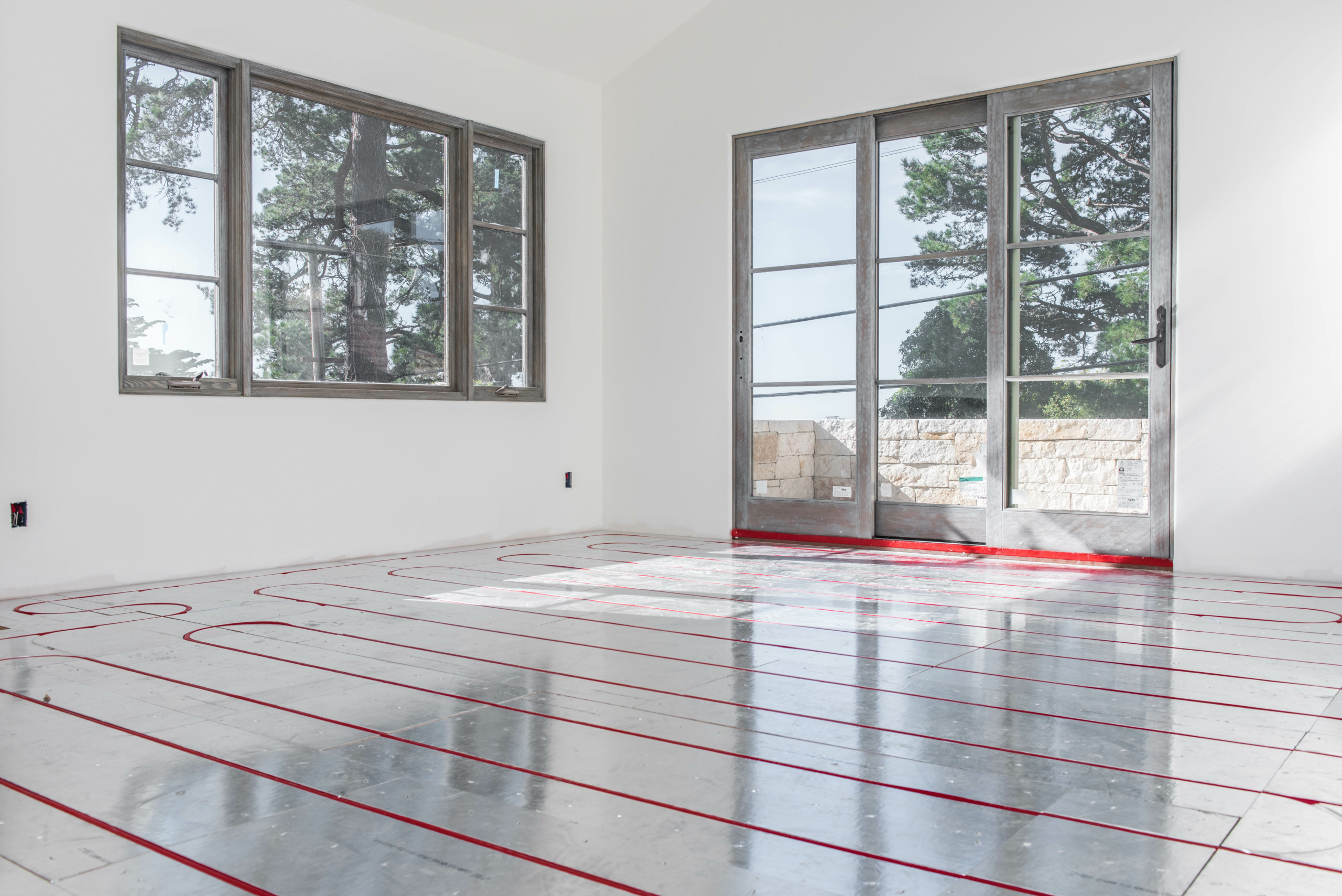
The rooms where in floor radiant heat delivers the most dramatic comfort improvement are bathrooms, where cold tile is eliminated entirely; kitchens, where people stand for extended periods; basements, which are chronically cold due to ground contact; and open-plan living areas, where forced-air systems struggle to heat large spaces evenly.
Primary bedrooms benefit from the quiet, draft-free warmth that radiant systems create, which many homeowners find improves sleep quality.
What Does In Floor Radiant Heat Cost?
For a hydronic whole-home system, total installed costs including panels, PEX tubing, manifold, controls, and heat source typically range from $12,000 to $43,000 for a 2,000 square foot home. The wide range reflects differences in heat source choice, local labor rates, and home insulation levels. A well-insulated new build requires a simpler, less expensive system than an older, leakier one.
PEX tubing and above-floor panel systems have a service life of 30 to 50 years, which is double to triple the typical lifespan of a forced-air furnace. Homes with radiant heat also sell 6 to 8 percent faster and consistently attract a price premium, making in floor radiant heat one of the strongest-returning building system investments available.
Is In Floor Radiant Heat Right for Your Project?
In floor radiant heat makes the most practical sense when a floor is already being opened up, whether in new construction or a renovation. The incremental cost of adding it at the right moment in the project timeline is substantially lower than retrofitting it later.
For whole-home applications, pair a hydronic system with an air-to-water heat pump and WBI’s low-temperature panels for the best long-term efficiency. For a single room being renovated, electric heat gets you the same comfort at a fraction of the upfront investment.
The comfort difference is real, and it compounds over time. Every January morning for the next 30 years, you either have warm floors or you do not. The time to make that decision is before the subfloor goes down.
Key Takeaways
- In floor radiant heat warms rooms from the ground up, producing even, silent, draft-free comfort that forced-air systems cannot replicate.
- Hydronic systems are best for whole-home heating; electric systems suit single rooms like bathrooms and kitchens.
- Paired with an air-to-water heat pump, WBI’s low-temperature panels create one of the most energy-efficient home heating systems available in 2026.
- WBI’s product range, including Ecowarm RadiantBoard, ThermalBoard, and their EPS insulated variants, covers every application from new construction above-subfloor to in-slab basement installations.
- Total installed cost for a hydronic whole-home system runs $12,000 to $43,000. Systems have a 30 to 50 year service life and homes with radiant heat sell 6 to 8 percent faster.