USA
USA Canada
Over Insulated Subfloor
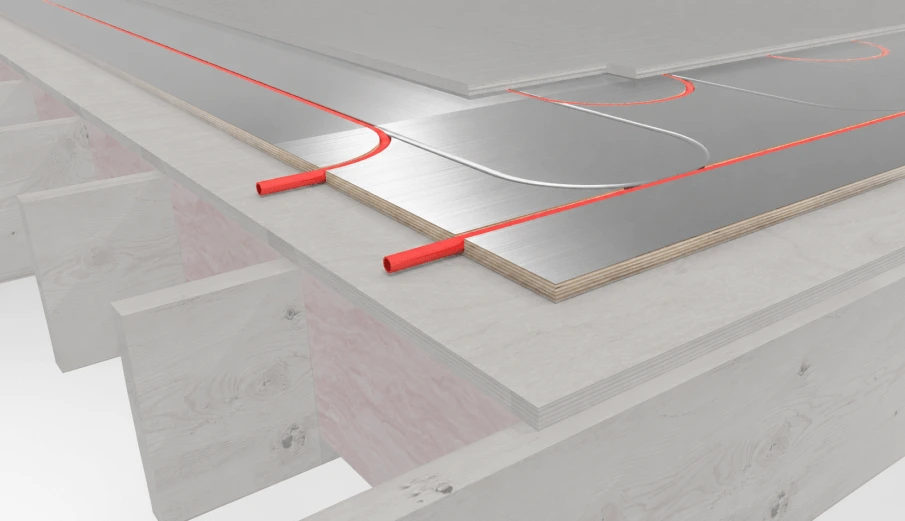
Radiant panels over a raised subfloor give you a dry, low-profile, lightweight underlayment with the thermal break already built in, and it goes down late in the build.
Radiant Heat Subfloors Panels with Built-In Insulation: A Smarter Heating Solution
A radiant heat subfloor with integrated insulation combines comfort and energy efficiency in one system, installing everything in a streamlined, high-performance configuration instead of separate layers.
Under the Subfloor, or Over It?
Both heat a room evenly. Where the tubing sits decides how hard the system has to work to do it.
Under the subfloor
Tubing between the joists
Over the subfloor
Tubing under the finished floor
Swipe the table sideways to compare both columns.
What It Can Sit On
Keep the surface level, dry and well fastened, and the panels will do the rest.
- Plywood & OSB. The usual pairing. Easy to work with, and strong once a thermal break is in the assembly.
- Concrete. A natural fit; insulation beneath the panel turns the slab into a stable, heat-retaining base.
- Existing floors. Low-profile panels can go over sound tile or vinyl, upgrading comfort without tearing the floor out.
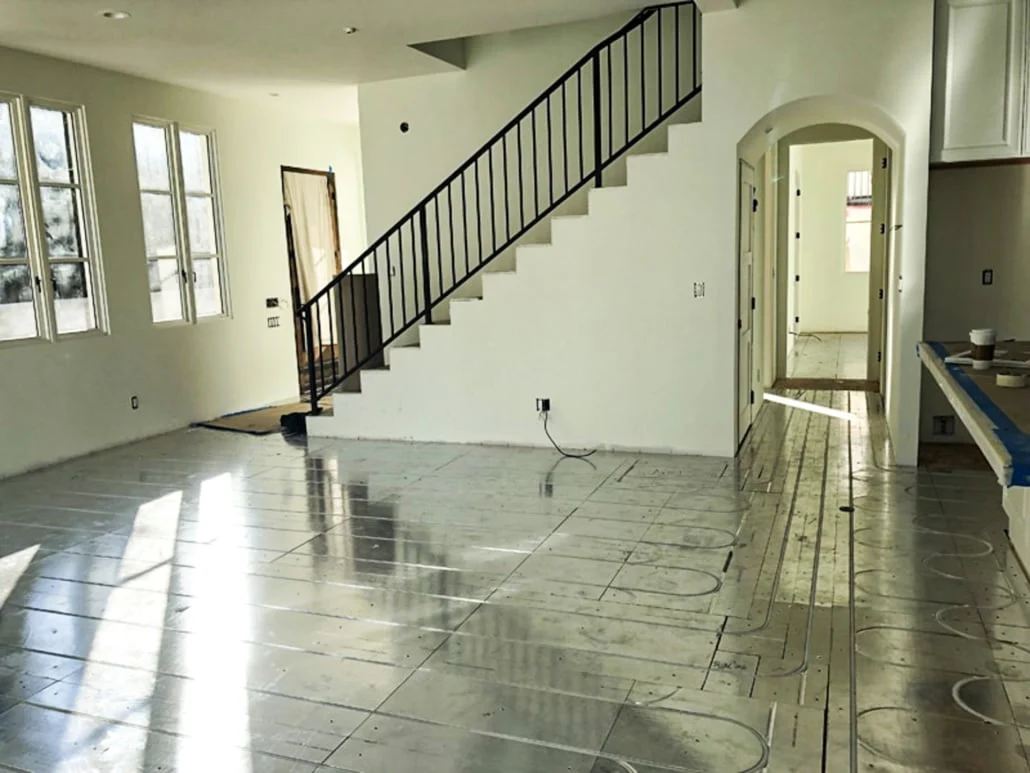
Panels laid straight onto the plywood deck of a house under construction.
How Over-Insulated Subfloors Work
Over-insulated subfloors combine hydronic radiant panels with a thermal break that pushes radiant energy up into the room instead of down into the structure.
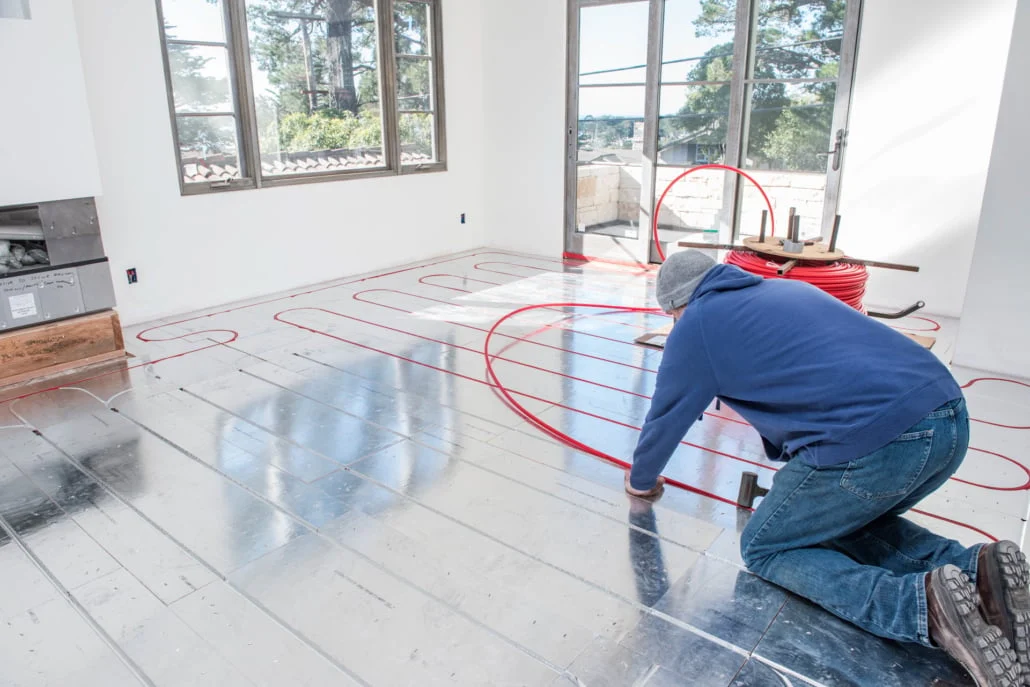
Tube going into the grooves on a live job. The panels are already down over the subfloor, and the thermal break is inside the board, so nothing extra has to be laid first.
Finish flooring
Hardwood, laminate, tile or carpet.
Hydronic tubing
Seated in the grooves, carrying the warm water.
Insulated radiant panel
A light grooved board with the thermal break built in.
Subfloor
Plywood, OSB or concrete.
The Smarter Alternative
Two other ways to get hydronic heat into a floor, and what each one costs you.
Staple-up under the subfloor
Aluminium plates fixed to the underside of the deck. The subfloor itself then sits between the tube and the room.
- What it costs you
- Higher water temperature to clear the added resistance
- Noticeably slower to answer the thermostat
- Worth it mainly when the existing floor cannot come up
Gypsum cement pour
A wet, heavy underlayment poured over the tube by a specialty contractor.
- What it costs you
- Curing time, which can hold up a cold-weather schedule
- A 1¼" build-up that wants double-plated walls
- Not suited to nailed hardwood without costly changes
- Roughly half the response rate of a WBI panel
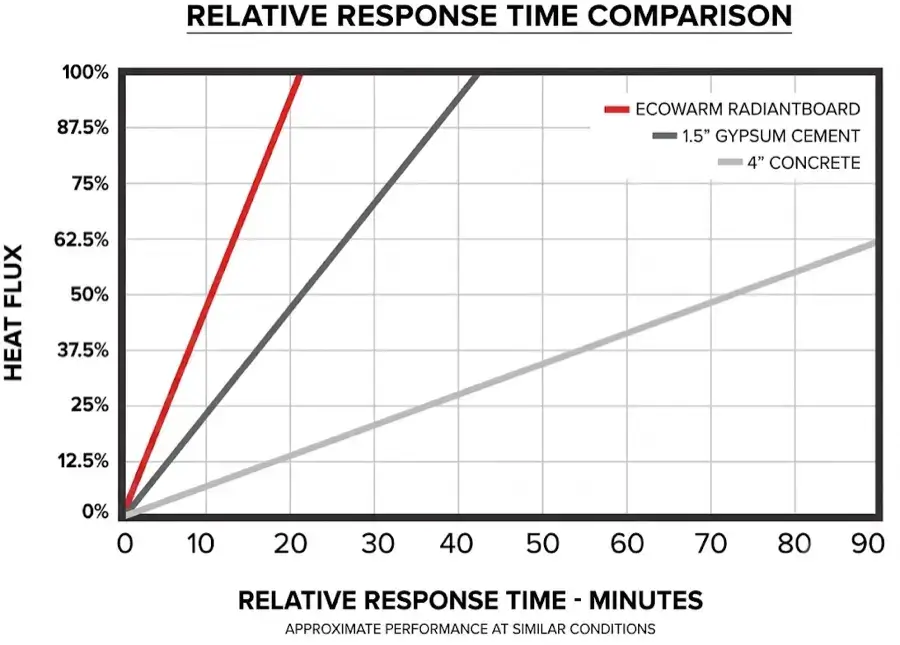
Response, measured
An Ecowarm panel reaches full output in roughly a third of the time gypsum takes, and a fraction of what a concrete slab needs. Less mass sitting over the tube is the whole explanation.
Additional Insights on Insulated Radiant Subfloors
What sets an over-insulated subfloor apart, from efficiency to install.
Enhanced Energy Efficiency
Heat is aimed upward instead of leaking into the structure, so the floor warms sooner on less fuel.
Comfort Beyond Traditional Heating
Even, draft-free warmth across the whole surface, with no hot registers and no cold corners.
Ideal for Various Applications
- Basements
- Remodels and retrofits
- New homes
- Commercial spaces
Compatible Flooring Options
- Hardwood and engineered wood
- Laminate and luxury vinyl
- Ceramic tile and stone
- Carpet with padding
Installation Advantages
- Lightweight and easy to cut
- Dry install, nothing to cure
- Fits late-stage construction
- Less labour than wet-pour or staple-up
From a Mechanical Contractor
The hands-on support is the best in the industry. The staff are friendly, professional, highly knowledgeable, and go above and beyond to meet our needs.
We’ve completed multiple projects with the RadiantBoard team, and their commitment to building long-term relationships is evident in the consistent quality, passion, and dedication to the success of our projects from beginning to end.
Frequently Asked Questions
Do these panels remove the need for separate insulation?
Do they work in cold climates?
How do they compare with electric heating mats?
Will they run on a low-temperature heat source?
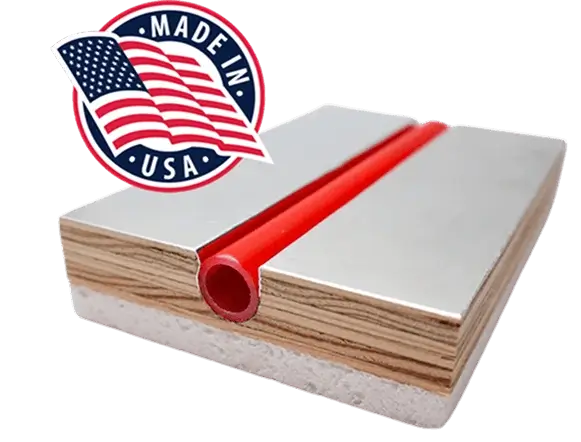
The Board That Carries the Insulation
One board holds the groove, the aluminium and the thermal break, which is what keeps the assembly thin, light and quick to lay.
- Low profile. Adds little height over an existing floor.
- Light and dry. Cut on site, no pour, no added structural load.
- Made in the USA. Shipped straight from the factory, cut to your panel schedule.
Work With Us
Tell us what the subfloor is and what goes on top. A panel layout comes back with the tube route drawn on it.