USA
USA Canada
Radiant Heat Over Concrete Slab
Comfort from the slab up. WBI over-slab insulated panels (Ecowarm RadiantBoard EPS and ThermalBoard EPS) put the radiant heat and a built-in thermal break on top of the concrete for faster warm-up at lower water temperatures.
Why Over Concrete
More Heat Up, Less Into the Slab
Concrete is a massive heat sink. Put the emitter and a thermal break on top of the slab and more of your BTUs move up into the room, at lower water temperatures.
Faster Warm-Up
Low-mass aluminum panels respond quickly to the thermostat and recover fast from setbacks.
Lower Supply Temps
Efficient around 90–120°F, a direct match for condensing boilers and air-to-water heat pumps.
Built-In Thermal Break
EPS under the panel reduces downward heat loss into the slab, pushing more heat into the room.
Clean, Dry Build
Adhesive plus mechanical fastening, no gypcrete, curing, or wet trades.
Slim & Configurable
Multiple thickness and R-value families to meet height limits and transitions.
Retrofit-Friendly
Add radiant to an existing slab with no core drilling, trenching, or extended downtime.
Over-Slab Systems
Choosing the Right Over-Slab System
Insulation Right Under the Panel
- Uninsulated or poorly insulated slabs:over-slab EPS panels (RadiantBoard EPS, plywood + 1/2″ PEX; ThermalBoard EPS, MDF + 3/8″ PEX) put insulation under the panel to cut downward heat loss and speed response.
- Already insulated?Non-EPS RadiantBoard or ThermalBoard can go directly over the slab; EPS-backed is still preferred where height allows.
How It Heats, and Why It’s Efficient
- Emitter and thermal break on top of the slab send more BTUs up: faster warm-up, better zoning, comfort in basements, additions, and remodels.
- Warm water through PEX heats from the surface for even, draft-free warmth, no cold spots or stratification.
- Low supply temps (typically 90–120°F) pair directly with condensing boilers and air-to-water heat pumps.
The Difference-Maker
Why Insulation Is Essential on Concrete
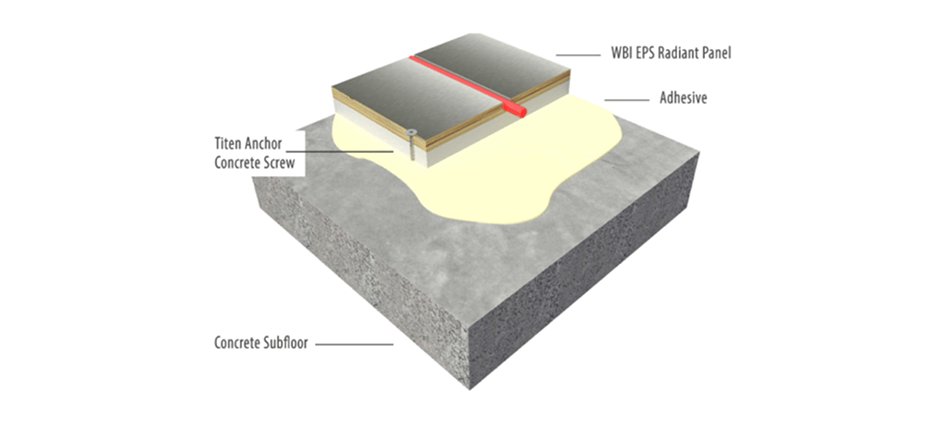
Creates a Thermal Break
EPS directly under the panel reduces downward heat loss into the slab so more heat reaches the room.
Higher Upward Output
Rooms reach setpoint faster at lower supply temps, while surface temperatures stay flooring-friendly.
Old vs New
The New Way vs The Old Way
Over-slab insulated panels replace high-mass, wet methods with a dry, responsive assembly built on top of the slab.
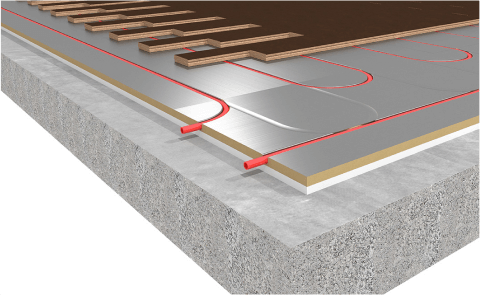
The New Way: Over-Slab Insulated Panels
Aluminum radiant panels bonded to EPS, fastened to the slab for a dry, fast-responding assembly that keeps heat in the room.
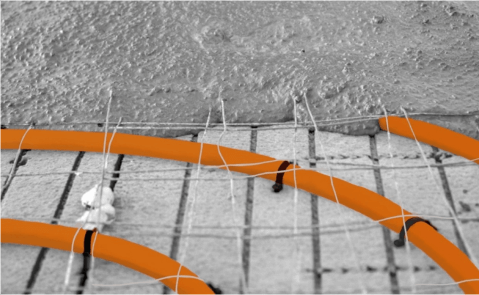
The Old Way: In-Slab / Wet Overpour
Heat is lost to slab mass, response is slow, and wet pours add moisture, weight, curing time, and higher water temps.
Ideal Applications
Where Over-Slab Panels Win
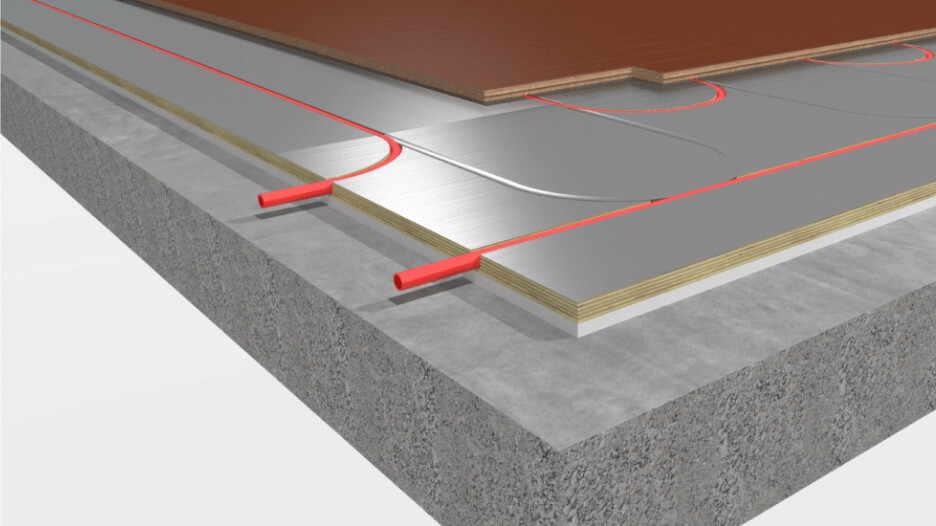
Uninsulated & Under-Insulated Slabs
Where in-slab tubing would bleed heat into the concrete, EPS-backed panels keep BTUs in the room and the surface flooring-friendly.
Retrofits & Existing Slabs
Add radiant to a finished slab with a clean, dry install, no trenching, core drilling, or extended downtime.
How It Works
Over-Slab Assembly, At a Glance
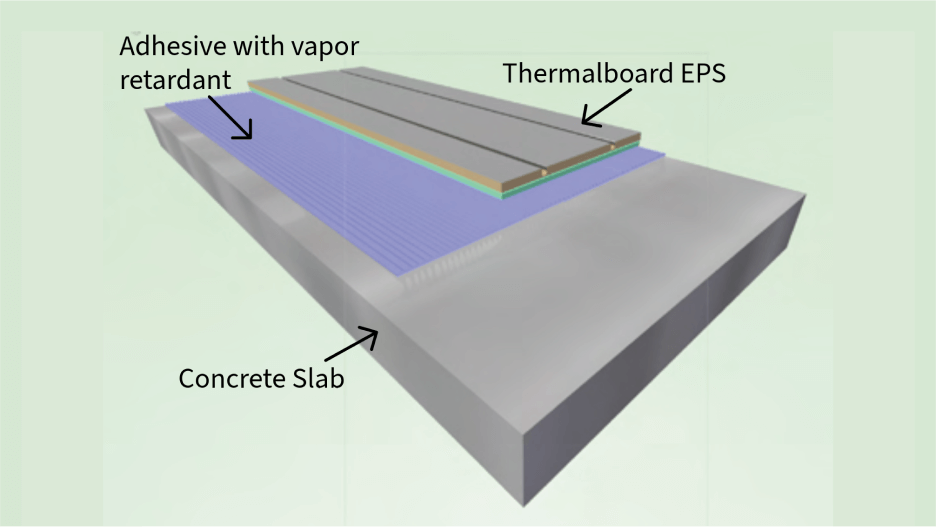
A dry, documented build sequence that keeps moisture in check and the system responding quickly at efficient water temperatures.
Moisture & Vapor Check
Verify slab moisture and apply a slab sealer or confirm a continuous vapor-barrier strategy as required.
Set Panels
Bond with approved construction adhesive and mechanically fasten per the installation manual.
Place Tubing
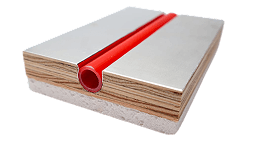
Press PEX into the factory aluminum grooves: 1/2″ for RadiantBoard EPS, 3/8″ for ThermalBoard EPS.
Finish Floor
Install underlayment and finish flooring per the flooring and panel guidelines.
Controls & Water Temps
Pair low-mass panels with outdoor reset and smart thermostats; most projects run well below traditional in-slab temps.
Typical Operating Temps
Cooler Water, Same Comfort
Putting insulation under the panel lets over-slab systems reach comfort at lower supply temperatures than mass-heavy in-slab methods.
Product Fit
Choose the Right Panel
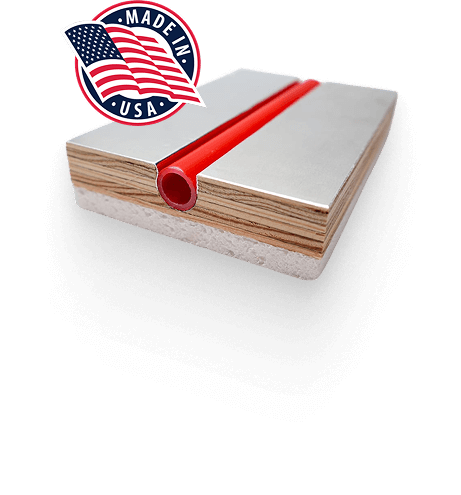
Ecowarm RadiantBoard EPS
Plywood core with bonded EPS, 1/2″ PEX. The high-output choice for uninsulated or under-insulated slabs.
ThermalBoard EPS
MDF core with bonded EPS, 3/8″ PEX. Low-profile insulated panel for tight height limits and transitions.
Quick Pick by Slab
- Uninsulated or under-insulated slab:Ecowarm RadiantBoard EPS (1/2″ PEX, plywood) or ThermalBoard EPS (3/8″ PEX, MDF).
- Properly insulated slab, minimal height:Ecowarm RadiantBoard or ThermalBoard (non-EPS).
- Insulated slab, height available:EPS-backed versions for better upward output and lower water temps.
FAQ
Frequently Asked Questions
Can I install radiant heat over an existing concrete slab?
Yes. WBI’s dry-install over-slab panels add radiant heat to an existing slab with no core drilling, trenching, or extended downtime.
Do I need insulation under the panels on a concrete slab?
On uninsulated or under-insulated slabs, EPS-backed panels add a thermal break that keeps heat in the room. If the slab already has proper underslab insulation, non-EPS panels can run directly over it.
What water temperatures do over-slab panels use?
Typically about 90–120°F, which pairs well with condensing boilers and air-to-water heat pumps.
How is this different from in-slab tubing or a wet overpour?
Over-slab panels are low-mass and dry-installed (no curing, added moisture, or extra weight), so they respond faster and waste less heat into the slab.
Which panel should I choose?
RadiantBoard EPS (plywood, 1/2″ PEX) or ThermalBoard EPS (MDF, 3/8″ PEX) for uninsulated slabs; non-EPS versions when the slab is already insulated and height is tight.
Work With Us
We are here to help you select the right panels for your over-concrete radiant project. Get a project-specific quote, or call a panel expert directly.