 USA
USA Canada
Applications · Walls & Ceilings
Radiant Ceiling Heat
and Wall Panels
Comfort you can feel, without touching the floor. WBI hydronic panels mount over walls and ceilings for fast, even warmth at lower water temperatures, ideal for remodels, high-loss rooms, and basements.
Why Walls & Ceilings
The Output of a Floor, Without the Floor
Overhead and wall surfaces can run warmer than floors, so they deliver more comfort at lower water temperatures and respond faster, all while leaving your finished floors untouched.
Higher Useful Output
Ceilings can run warmer than floors, about 55 BTU/hr/ft² at 102°F in a 68°F room, roughly 60% more than radiant floors capped near 85°F.
Lower Temps, Higher Efficiency
Supply runs about 80 to 95°F for ceilings and walls versus 95 to 120°F for floors, so overall efficiency is higher.
Fast Response, Low Mass
Less thermal mass means quicker warm-up and easier setback recovery.
No Floor Conflicts
No rugs, furniture, or floor transitions to fight, so performance stays consistent and floor design stays flexible.
Retrofit Friendly
Minimal weight and headroom loss, ideal when you cannot alter finished floors or raise ceilings, especially in basement remodels.
Pairs With Low-Temp Heat
Low supply temperatures suit mod-con boilers and heat pumps targeting efficient, low water temperatures.
Ideal Applications
Where Walls & Ceilings Win
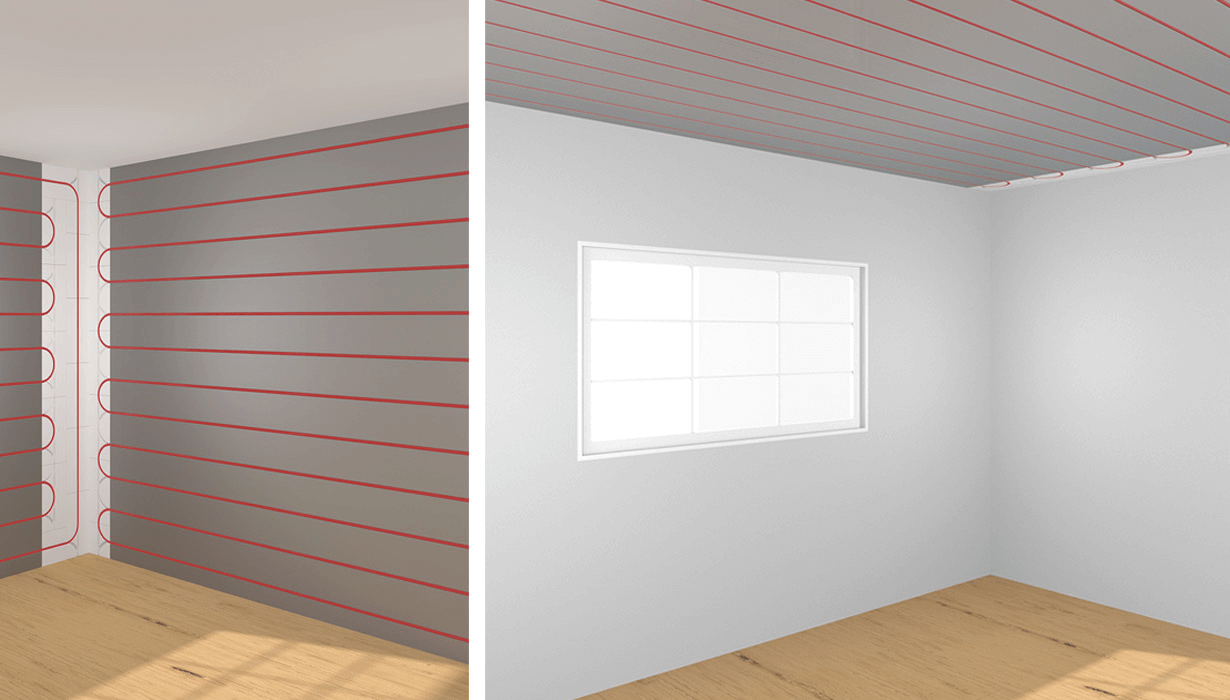
Basement Remodels
When the finished floor height is set and the ceiling height cannot be reduced, wall-mounted radiant panels bring comfort without taking precious headroom.
High-Loss & Trophy Rooms
Rooms where the floor cannot carry the full heating load on its own, including spaces with large glazing, vaulted ceilings, or heavy heat loss.
How It Works
Installation Overview, At a Glance
A clean, documented build sequence that keeps panels protected and the system running quietly at comfortable surface temperatures.
Mounting
Staple panels directly to joists where spacing allows, or sheath joists with 5/8 to 3/4 inch plywood and apply panels per the CAD layout.
Backside Insulation
Insulate the ceiling or wall cavity to minimize reverse-side losses and keep heat directed into the room.
Tubing & Protection
Install PEX per plan. Pro tip: staple clear plastic over the panels and mark the tube paths, then reuse it as a guide during drywall to avoid fastener hits.
Air Elimination
Provide a central micro-bubbler and fully purge air from the loops on startup for quiet, reliable circulation.
Controls & Safety
Use low-temp thermostatic water control with a high surface-temperature cut-off. Ceiling systems typically operate below 90°F water for comfort.
Typical Operating Temps
Cooler Water, Same Comfort
Walls and ceilings reach comfort with noticeably lower supply water temperatures than floors, which is where the efficiency gains come from.
Product Fit
Choose the Right Panel
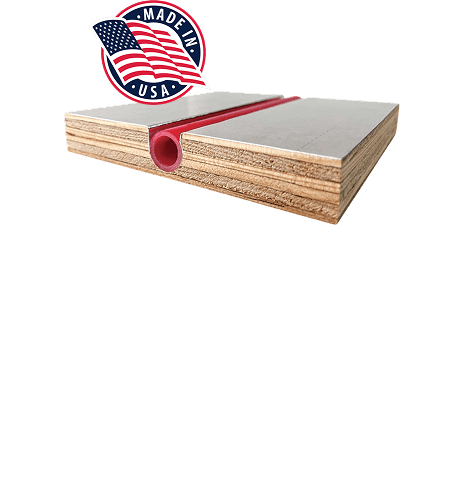
Ecowarm RadiantBoard & ThermalBoard
High response with clean finish integrations, ideal where you want fast warm-up and a tidy assembly behind the drywall.
EPS-Backed Options
Useful wherever backside insulation and panel build-up strategy are key, such as plywood-backed assemblies and ceiling cavities.
For Pros
Spec It With Confidence
Basements With No Ceiling Flexibility
Wall applications preserve valuable headroom while still delivering full radiant comfort.
Design Toolbox
Reach for ceilings and walls when floor goods, height, or coverage limit the output a floor can deliver.
Low-Temp System Synergy
An ideal match for mod-con boilers and heat pumps targeting low supply water temperatures.
Documented Layouts
Factory CAD support streamlines tube routing and penetrations, so installs go in clean the first time.
Work With Us
Get a project-specific quote for your slab-on-grade, basement, garage, or remodel. We will help you choose the right panel solution for your project.
Request a Free Quote



FAQ