USA
USA Canada
What Is Hydronic Floor Heating? Types & Benefits
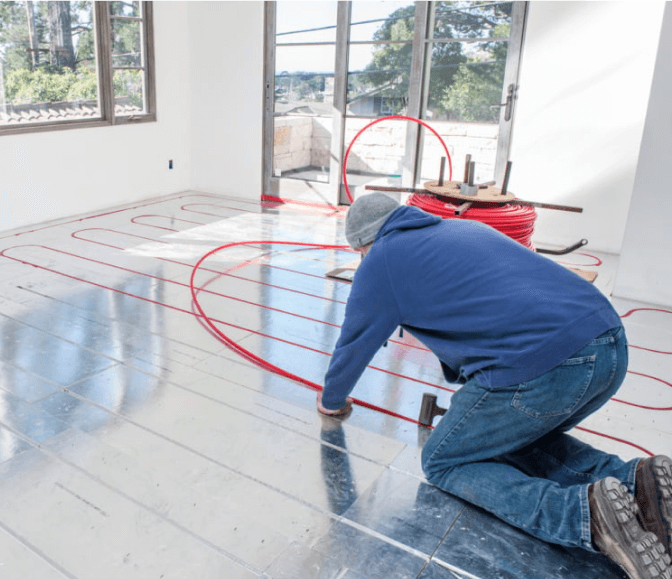
When homeowners and builders start researching hydronic floor heating, one question usually leads to another:
How does it work?
What are the different types of hydronic heating systems?
Is it better than forced air?
What system should I install in my project?
This guide breaks it all down clearly and practically so you can understand how a hydronic floor heating system works and which type makes the most sense for your application.
What Is Hydronic Floor Heating?
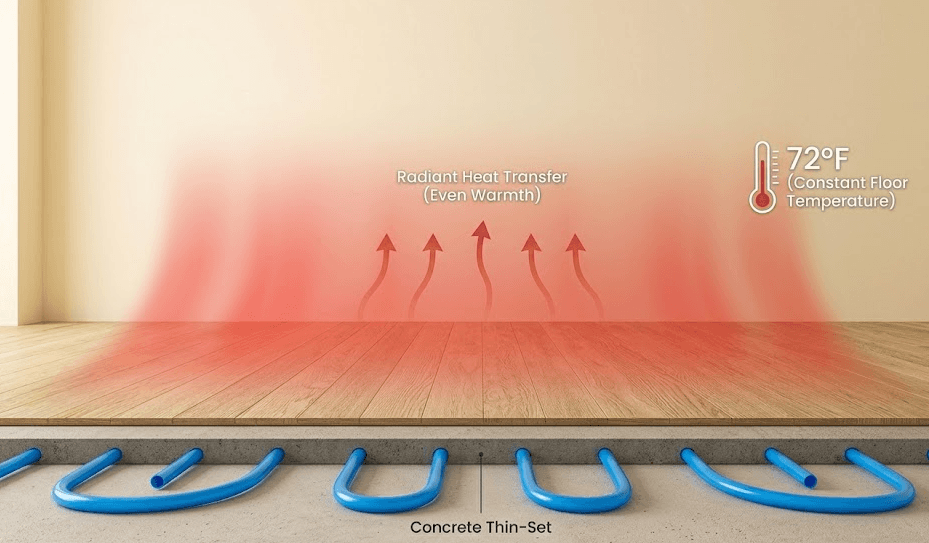
Hydronic floor heating is a type of hydronic radiant heating system that uses warm water circulating through PEX tubing installed beneath the floor surface.
Instead of blowing hot air through ducts, the system:
- Heats water with a boiler or heat source
- Pumps the water through tubing embedded in or beneath the floor
- Transfers heat upward through the flooring surface
- Radiates heat evenly into the room
The result is quiet, even, draft-free warmth.
Why Hydronic Heated Floors Feel Different
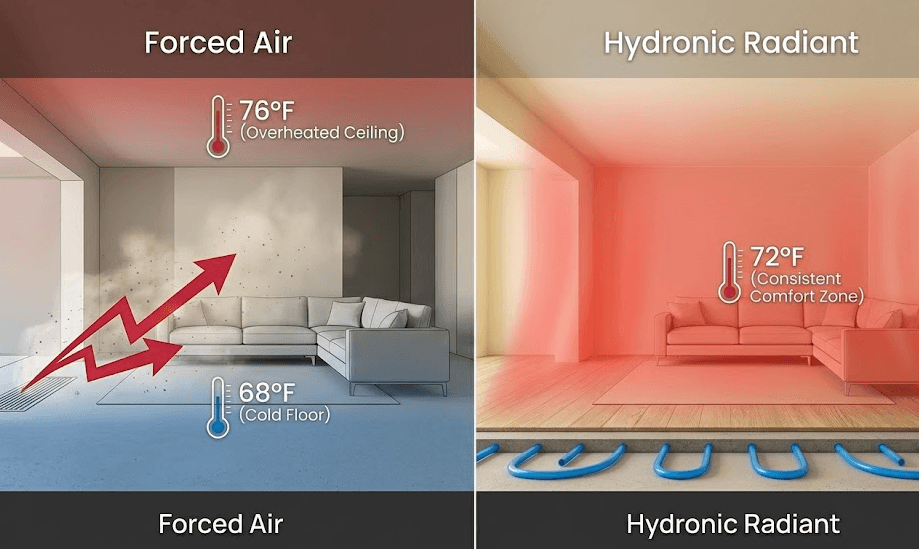
Traditional forced-air systems heat the air first. That warm air rises, cools, and cycles repeatedly. This creates:
- Temperature swings
- Drafts
- Dust movement
- Hot ceilings and cool floors
Hydronic heated floors warm the mass of the floor itself. The floor becomes the heat emitter. Because heat rises naturally and evenly, rooms feel comfortable at lower thermostat settings.
Benefits include:
- Even temperature from wall to wall
- Improved comfort in tile and bathroom floors
- Lower air movement
- Quiet operation
- Zoned heating capability
Types of Hydronic Heating Systems
When people search for “types of hydronic heating systems,” they are usually referring to how the tubing is installed and how heat is delivered.
Here are the primary system types:
1. Under-Slab Systems
Tubing is installed in concrete before the slab is poured.
Best for:
- New construction
- Garages
- Basements
- Barndominiums
Advantages:
- High thermal mass
- Long heat retention
Consideration:
- Slower response time
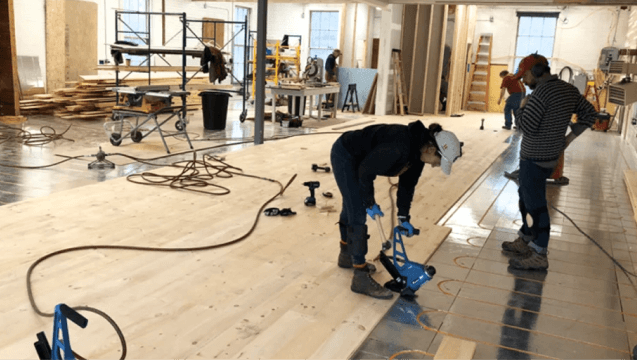
2. Above-Subfloor Panel Systems
These systems install on top of an existing subfloor.
Best for:
- New homes
- Custom builds
- High-performance projects
- Remodels
- Retrofits
- Projects where the subfloor is already installed
This is where products like:
- RadiantBoard
- ThermalBoard
- RadiantBoard EPS
- ThermalBoard EPS
from Warm Brothers Inc. are commonly used.
These systems provide:
- Consistent aluminum coverage
- Predictable tubing spacing
- Flexible installation options
- Fast response
- High heat transfer
- Simplified installation
EPS-backed versions are ideal for concrete or non-insulated floors because they reduce downward heat loss and improve upward heat output.
Key Components of a Hydronic Floor Heating System
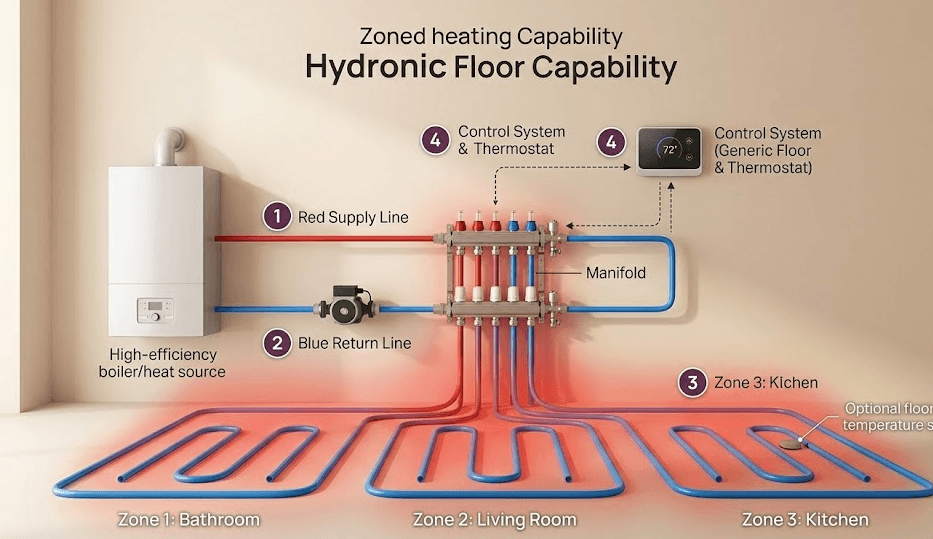
No matter which installation type you choose, every hydronic radiant heating system includes:
- Boiler or heat source
- Manifold
- Circulator pump
- PEX tubing
- Control system and thermostats
- Optional floor temperature sensors
Modern systems can integrate with:
- High-efficiency boilers
- Heat pumps
- Solar thermal
- Smart thermostats
Design Considerations for Hydronic Floor Heating
Performance depends on more than just tubing in the floor. Key variables include:
- Tube spacing
- Aluminum thickness and coverage
- Floor covering type
- Insulation below the system
- Supply water temperature
- Load calculation accuracy
A properly designed hydronic floor heating system balances comfort, efficiency, and response time.
For contractors, panel-based systems simplify layout and reduce installation guesswork. For homeowners, that translates into more predictable comfort and lower operating costs.
Hydronic Floor Heating for Homeowners
If you are building or remodeling and considering hydronic heated floors, here are three quick questions to ask:
- Is this new construction or retrofit?
- What type of flooring will be installed?
- Do I want fast response or high thermal mass?
Hydronic radiant heat is especially popular in:
- Bathrooms
- Kitchens
- Basements
- Whole-home custom builds
The comfort difference is noticeable immediately, especially in colder climates.
Hydronic Floor Heating for Contractors
Contractors evaluating types of hydronic heating systems typically prioritize:
- Installation speed
- Layout flexibility
- Supply chain reliability
- Performance predictability
- Compatibility with heat pumps
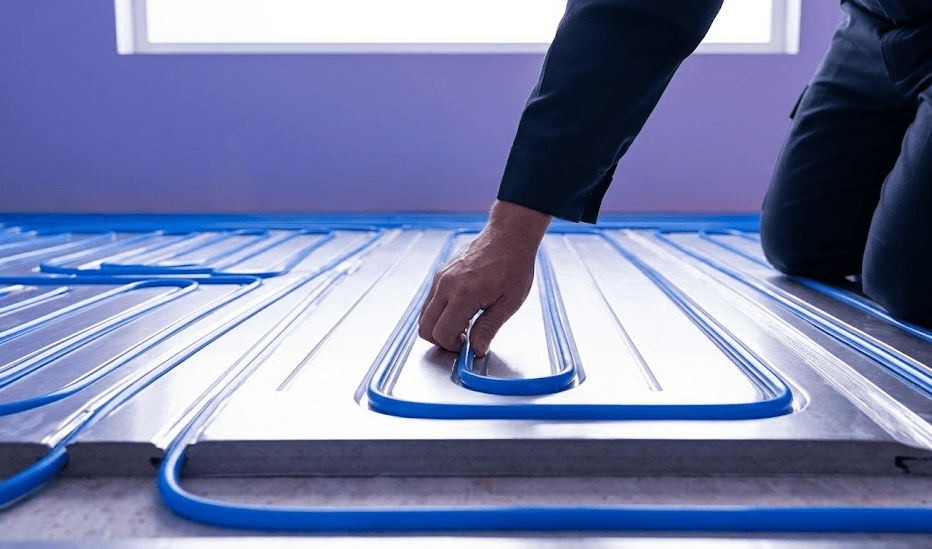
Above-subfloor panel systems offer:
- Clean installation
- Reduced callbacks
- Controlled tubing spacing
- Reduced design variability
Working with a manufacturer that offers CAD layouts and system support can simplify execution and reduce jobsite surprises.
Is Hydronic Floor Heating Worth It?
In most residential applications, yes.
Compared to forced air, a hydronic radiant heating system offers:
- Higher comfort quality
- Lower perceived temperature swings
- Silent operation
- Long system lifespan
- Zoned efficiency
The key is selecting the correct system type for your application.
Final Thoughts
Hydronic floor heating continues to grow in popularity because it delivers something simple: better comfort.
Whether installed under a slab, integrated into a structural panel, or applied above an existing subfloor, a properly designed hydronic floor heating system can dramatically improve the performance and feel of a home.
If you are planning a project and exploring your options, understanding the types of hydronic heating systems is the first step toward building a system that performs exactly as expected.
About The Author

![Optional-PEX-Tubing[1]](https://wbiwarm.com/wp-content/uploads/2024/12/Optional-PEX-Tubing1-768x512.png)