USA
USA Canada
Radiant Cooling Explained: Benefits & How It Works
Most people are familiar with radiant heating. Warm floors, even temperatures, quiet comfort. But fewer people realize the same hydronic concept can be used for radiant cooling.
As high-performance homes and heat pump systems become more common, radiant cooling is gaining attention as an energy-efficient, draft-free alternative to traditional air conditioning.
This guide explains what radiant cooling is, how it works, and when it makes sense.
What Is Radiant Cooling?
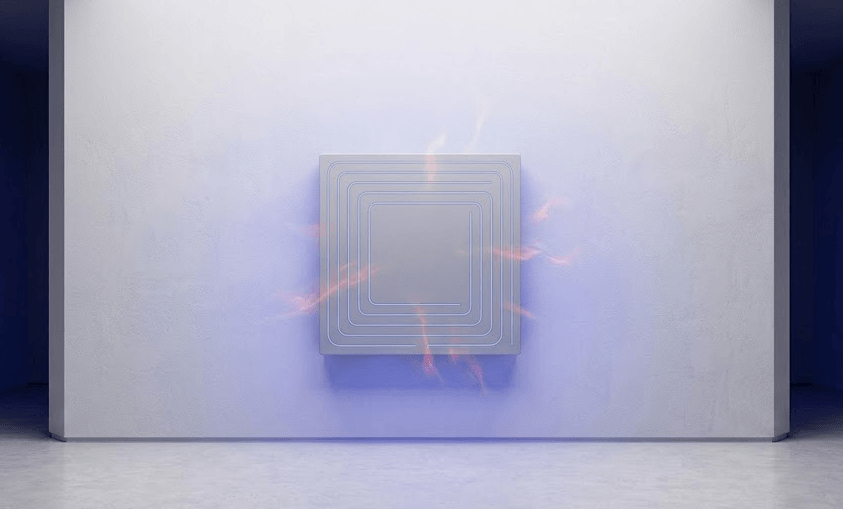
Radiant cooling is a hydronic system that circulates cool water through tubing embedded in ceilings, floors, or walls.
Instead of blowing cold air into a room, a radiant cooling system:
- Circulates cool water through PEX tubing
- Lowers the surface temperature of ceilings or panels
- Absorbs heat from the room through radiant transfer
- Gently removes heat without high air movement
It works on the same principle as standing near a cool concrete wall in summer. The surface absorbs heat from your body and the room.
How Radiant Cooling Is Different from Traditional AC
Traditional air conditioning systems:
- Cool air and distribute it through ducts
- Create airflow and drafts
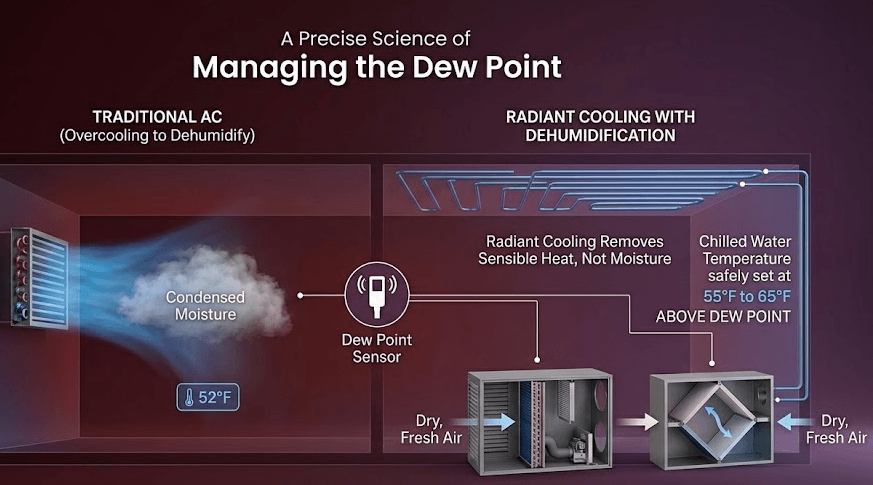
- Often overcool spaces to control humidity
Radiant cooling:
- Primarily removes sensible heat through surfaces
- Minimizes airflow
- Operates quietly
- Delivers more even temperatures
Because heat naturally transfers from warm objects to cooler surfaces, a cooled ceiling or panel absorbs heat without needing to blast air.
Where Radiant Cooling Is Installed
Radiant cooling is typically installed in:
- Ceilings (most common)
- Walls
- Occasionally floors
Ceilings are preferred because:
- Cool air naturally falls
- Risk of condensation is easier to manage
- Furniture does not block radiant exchange
Hydronic panel systems similar to radiant floor systems can be adapted for ceiling applications using aluminum heat transfer layers and consistent tubing spacing.
Manufacturers like Warm Brothers Inc. primarily design panel systems for radiant heating, but hydronic-based panel approaches can be engineered to integrate with cooling systems when properly designed.
The Science Behind Radiant Cooling
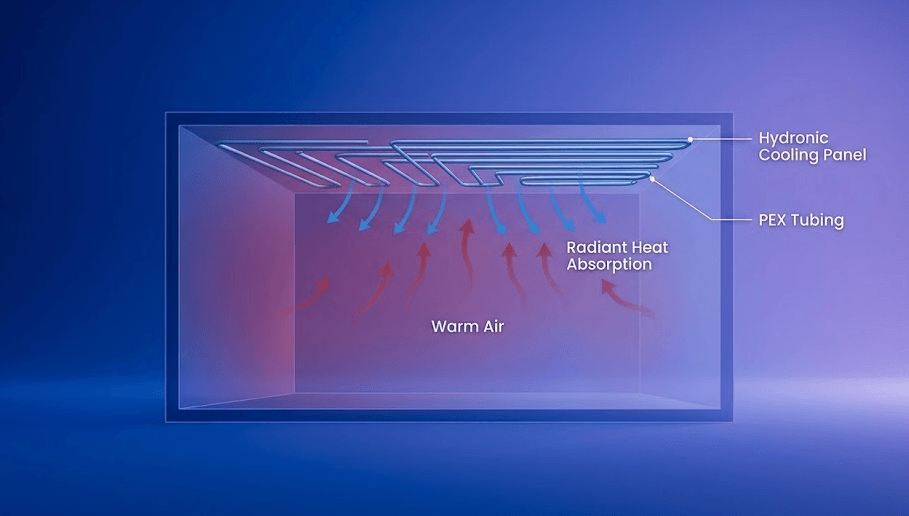
Radiant cooling works through two key heat transfer mechanisms:
- Radiation – Warm surfaces transfer heat to cooler ceiling panels.
- Convection (secondary) – Slight air movement occurs as cooler surfaces influence surrounding air.
The system removes sensible heat, not moisture.
This is important.
Radiant cooling does not replace dehumidification. In humid climates, it must be paired with:
- Dedicated outdoor air systems (DOAS)
- ERVs (Energy Recovery Ventilators) with humidity control
- Supplemental dehumidifiers
Humidity control is critical because surface temperatures must stay above the dew point to prevent condensation.
Benefits of Radiant Cooling
When designed properly, radiant cooling offers:
1. Energy Efficiency
Because it relies on water instead of high-volume air movement, it can operate at higher chilled water temperatures than conventional AC coils. This improves heat pump efficiency.
2. Quiet Operation
No large duct systems or high-speed blowers.
3. Even Comfort
No hot and cold spots caused by register placement.
4. Reduced Air Movement
Helpful in environments where dust circulation is undesirable.
5. Integration with Hydronic Systems
Homes already using hydronic radiant heating can potentially integrate radiant cooling using compatible heat sources and controls.
Radiant Cooling and Heat Pumps
Radiant cooling pairs especially well with:
- Air-to-water heat pumps
- Ground-source heat pumps
These systems can produce:
- Warm water in winter
- Chilled water in summer
The same tubing infrastructure can serve both heating and cooling functions when engineered correctly.
Design Considerations
Radiant cooling requires careful design. It is not simply “cold water in the floor.”
Key considerations include:
- Dew point monitoring
- Supply water temperature control
- Ceiling surface area sizing
- Load calculations
- Humidity management
A properly designed system typically runs chilled water temperatures between 55°F and 65°F to stay safely above condensation thresholds.
Contractors should coordinate HVAC, hydronic, and building envelope design early in the project.
Is Radiant Cooling Right for Every Home?
Not necessarily.
Radiant cooling works best in:
- Well-insulated homes
- Tight building envelopes
- Homes with controlled ventilation systems
- Projects already using hydronic heating
It may not be ideal for:
- High-humidity regions without dedicated dehumidification
- Homes relying solely on traditional forced-air infrastructure
However, in high-performance homes, radiant cooling can significantly improve comfort while reducing mechanical noise and airflow.
Final Thoughts
Radiant cooling is not new technology, but it is becoming more relevant as modern building practices evolve.
As homes become tighter and more energy-efficient, the combination of hydronic radiant heating and radiant cooling offers a compelling path toward year-round comfort without relying solely on high-velocity air systems.
When designed correctly, radiant cooling delivers what many homeowners are seeking:
Comfort you feel
Without noise
Without drafts
Without compromise
About The Author