USA
USA Canada
Radiant Floor Heating with Hardwood: Best Practices

Wood radiant floor heating offers homeowners a seamless blend of traditional beauty and modern performance. With today’s hydronic radiant panel systems, you can confidently install hardwood flooring while enjoying even warmth, lower operating temperatures, and long-term comfort.
When properly designed and installed, radiant heat under hardwood flooring is one of the most comfortable heating solutions available.
Why Wood and Radiant Heat Work So Well Together
Radiant heating warms the floor surface directly. Heat rises evenly throughout the room without forced air, vents, or visible equipment.
That means:
- No noisy fans
- No drafts
- No cold spots
- No ductwork disrupting design
With wood radiant floor heating, you get the elegance of hardwood with the quiet comfort of a hydronic radiant heating system.
Installing Hardwood Over Radiant Panels
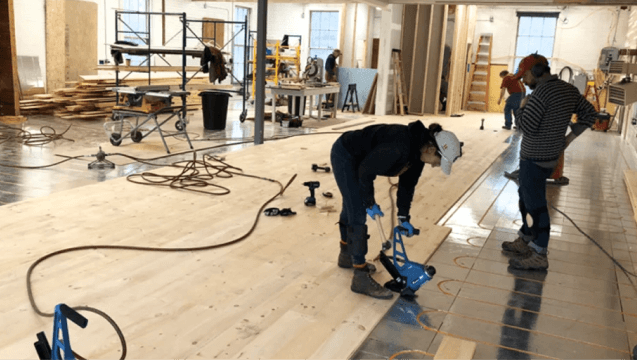
A conventional nailed hardwood system may be used directly over radiant panels when done correctly.
Key installation principles include:
- Use fasteners long enough to penetrate through the radiant panel and into the subfloor.
- Always orient hardwood flooring perpendicular to the tubing direction.
- Follow recommended temperature controls.
- Reference panel groove layout carefully to avoid puncturing tubing.
Panel systems such as ThermalBoard and Ecowarm RadiantBoard from Warm Brothers Inc. are designed to support traditional hardwood installations while providing consistent heat transfer.
These systems feature:
- Precision-grooved channels for PEX
- High conductivity aluminum for responsive heating
- Durable surface laminate
- Low-profile, lightweight construction
- No VOCs or added formaldehyde
Engineered vs Solid Hardwood for Radiant Applications

When installing wood radiant floor heating, flooring selection matters.
1. Engineered Hardwood (Recommended)
- More dimensionally stable
- Designed to handle temperature fluctuations
- Often manufacturer-approved for radiant use
Engineered wood flooring installed over ThermalBoard or Ecowarm should use controls that gradually adjust water temperature through an outdoor reset curve. A floor temperature limiting sensor helps comply with flooring manufacturer requirements.
2. Solid Hardwood
- Can be used when properly controlled
- Choose stable species such as oak, cherry, or ash
- Avoid moisture-sensitive species like maple or hickory
Always verify radiant compatibility with the flooring manufacturer before installation.
Temperature and Control Best Practices
Wood radiant floor heating is not about high temperatures. It is about steady, moderate warmth.
Follow these guidelines:
- Maintain surface temperature between 80 and 85°F
- Use smart thermostats with outdoor reset
- Install a floor sensor to prevent overheating
- Avoid rapid temperature spikes
Proper control protects the wood and improves comfort.
Acclimation and Moisture Management
Wood movement is more affected by humidity than temperature.
Best practices include:
- Acclimate flooring for 5 to 7 days before installation
- Maintain indoor humidity between 30 and 50 percent
- Use moisture barriers where required
- Ensure subfloor is dry, clean, and level
- Pressure test tubing before installing flooring
These steps protect both the wood and the hydronic floor heating system.
Installation Methods for Radiant Heat Under Hardwood
Radiant heat under hardwood can be installed using:
- Nail-down method
- Glue-down method
- Floating floor method
For engineered hardwood radiant floor heating, full-spread glue-down or floating installations often provide the most consistent thermal transfer and minimize floor movement.
If nailing over radiant panels, always reference the tubing layout to avoid punctures. In some cases, thin plywood or protective underlayment may be used to safeguard tubing during fastening.
Benefits of Radiant Floor Heating Under Hardwood

When properly installed, wood radiant floor heating delivers:
1. Silent, Even Heat
Consistent warmth without fans or airflow disruptions.
2. Improved Energy Efficiency
Hydronic systems operate at lower water temperatures compared to forced-air systems, reducing energy consumption while maintaining comfort.
3. Invisible Comfort
No registers, radiators, or ductwork. More freedom in room design and furniture layout.
4. Zonal Flexibility
Set different temperatures for bedrooms, living areas, and basements to optimize comfort and efficiency.
5. Faster Response with Panel Systems
High-conductivity panel systems allow quicker heat-up times and more predictable performance.
Radiant Heat Under Engineered Hardwood
For many projects, radiant heat under engineered hardwood is the safest and most reliable choice.
Before installation:
- Confirm the product is approved for radiant applications
- Verify temperature limits
- Ensure adhesives or underlayment’s are compatible with heated flooring
- Avoid sudden increases in water temperature
Engineered hardwood radiant floor heating combines dimensional stability with efficient heat transfer, making it ideal for both remodels and new construction.
Final Thoughts
Wood radiant floor heating allows homeowners to enjoy traditional hardwood aesthetics with modern hydronic comfort.
With the right flooring selection, moisture control, and temperature management, radiant heat under hardwood becomes one of the most comfortable and energy-efficient heating systems available.
Whether you choose engineered hardwood over radiant heat or carefully selected solid hardwood, the key is proper design and control.
When done correctly, warmth beneath tradition becomes one of the most luxurious upgrades a home can offer.
About The Author

![Optional-PEX-Tubing[1]](https://wbiwarm.com/wp-content/uploads/2024/12/Optional-PEX-Tubing1-768x512.png)