USA
USA Canada
Radiant Floor Heating Over Concrete: Panel Systems vs In-Slab Systems
Concrete radiant floor heating is known for its comfort and efficiency, but not all concrete radiant systems perform the same. One of the biggest differences comes down to how the tubing is installed: embedded directly in the slab or supported by a panel-based system installed over the concrete.
Both approaches provide radiant comfort, but panel-based systems offer distinct advantages in responsiveness, control, and energy efficiency.
In-Slab Radiant Floor Heating
In-slab radiant systems place the tubing directly within the concrete pour. As warm water circulates through the tubing, the slab absorbs the heat and slowly releases it into the space.
This approach provides very steady temperatures, but it also comes with trade-offs.
In-slab systems:
- Rely on the slab’s thermal mass to store heat
- Warm up slowly and cool down slowly
- Typically require higher water temperatures
- Can be less responsive to changing conditions
Because so much energy is spent heating the entire slab mass, these systems often need higher supply water temperatures to achieve comfort, especially during cold weather or intermittent use.
Panel-Based Concrete Radiant Floor Heating
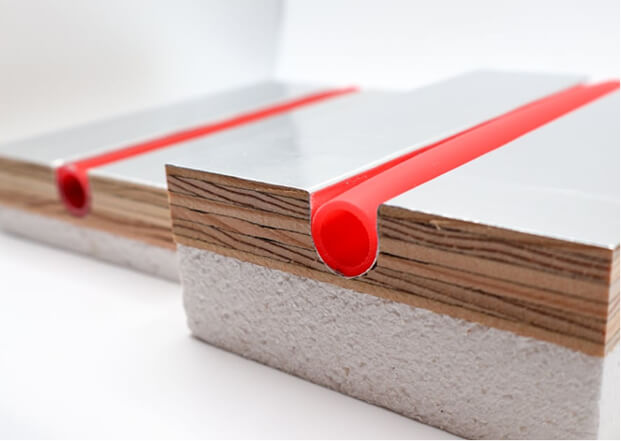
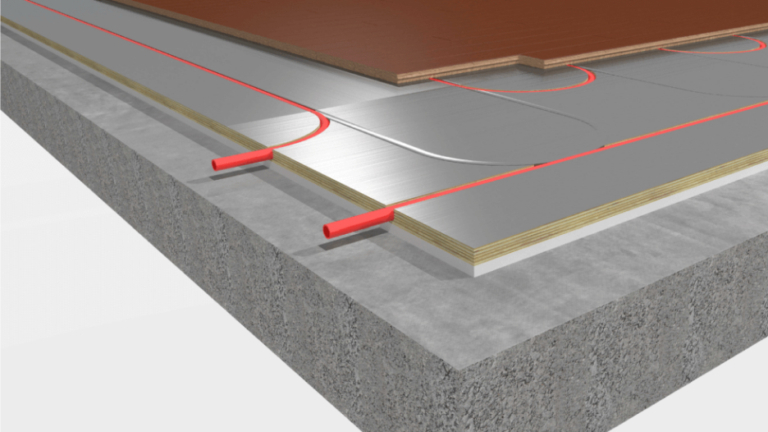
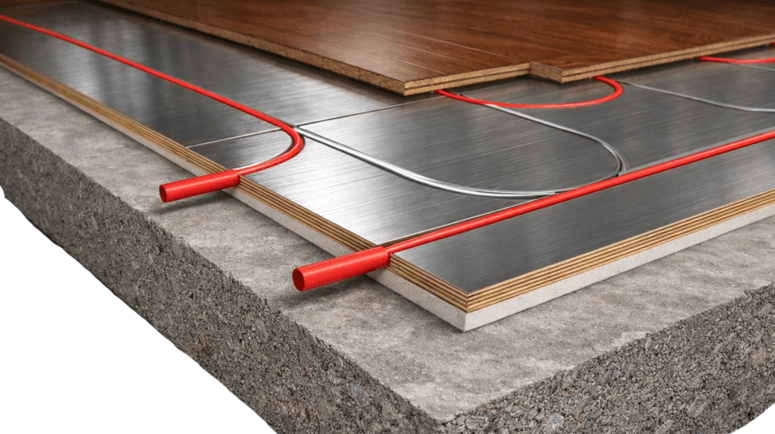
Panel-based radiant systems are installed over an existing concrete slab. The tubing is held in engineered radiant panels that sit between the slab and the finished floor.
Instead of heating the entire slab, panel-based systems focus heat closer to the occupied space.
This design allows panel-based systems, such as those offered by WBI, to operate at lower water temperatures while still delivering comfortable, even floor warmth.
Panel-based systems offer:
- Faster response times
- More precise temperature control
- Improved upward heat transfer
- Reduced energy loss into the slab
- Lower required water temperatures
Lower water temperatures translate directly into higher system efficiency and better compatibility with modern heat sources.
Why Lower Water Temperature Matters
The efficiency of a hydronic system is strongly tied to supply water temperature. The lower the required water temperature, the more efficient the system can be.
Panel-based radiant systems allow:
- Boilers to run more efficiently
- Improved performance with condensing boilers
- Better integration with heat pumps
- Reduced overall energy consumption
By bringing the tubing closer to the finished floor and minimizing unnecessary thermal mass, panel-based concrete radiant floor heating makes better use of every BTU produced.
Comfort Without the Delay
In-slab systems are excellent at maintaining steady temperatures but can feel sluggish when conditions change. Panel-based systems strike a balance by delivering radiant comfort without long delays.
WBI panel-based solutions are designed to provide even heat distribution across the floor while responding more quickly to thermostat adjustments and changing outdoor conditions.
Installation Flexibility and Flooring Options
Panel-based systems are well-suited for retrofit projects, finished slabs, and spaces where pouring new concrete is not practical. They also integrate cleanly with many flooring types, including:
- Tile and stone
- Engineered hardwood
- Luxury vinyl plank
This flexibility makes panel-based radiant heating an attractive option for basements, remodels, and slab-on-grade homes.
Long-Term Efficiency and Reliability
Both in-slab and panel-based radiant systems can provide excellent comfort, but panel-based systems offer a more efficient use of energy over time.
WBI panels are engineered to deliver consistent performance, helping radiant systems operate efficiently for decades while maintaining the comfort homeowners expect.
Choosing the Right Approach
Concrete radiant floor heating should be designed around how the space will be used. For applications requiring fast response, lower operating temperatures, and maximum efficiency, panel-based systems offer clear advantages over traditional in-slab installations.
When comfort, efficiency, and modern heating compatibility matter, panel-based concrete radiant floor heating provides a smarter path forward.
About The Author